The dust at the Mpondwe border crossing between the Democratic Republic of Congo and Uganda has a specific, metallic scent. It sticks to the back of your throat. Thousands of feet churn this earth every day—traders carrying heavy sacks of charcoal, children darting between truck tires, and grandmothers with colorful fabric wrapped tight around their shoulders. It is the frantic heartbeat of East Africa. But lately, a new sensation has settled over the crowd. It isn't quite fear. It is a calculated, breathless waiting.
Somewhere in that sea of moving bodies, a microscopic passenger is traveling. It doesn’t carry a passport. It doesn’t care about the political lines drawn in the sand. This is the Ebola virus, specifically the Zaire strain, and its recent resurgence has forced the World Health Organization to pull the emergency lever.
When the WHO declares a Public Health Emergency of International Concern (PHEIC), the world usually hears a bureaucratic drone. They see spreadsheets and budget allocations. But on the ground, the reality is a young man named Joseph standing in a triage tent, feeling the first, deceptive warmth of a fever. He thinks it’s malaria. He’s had malaria four times. He hopes it’s malaria. Because if it isn’t, the life he knew—and the lives of everyone he touched on the bus ride here—are about to be dismantled by the cold machinery of global biosecurity.
The Anatomy of a Shadow
Ebola is not a ghost, though it acts like one. It is a viral hemorrhagic fever with a terrifyingly high mortality rate, sometimes claiming up to 90% of those it infects. The current outbreak pulsing through the DRC and spilling into Uganda is particularly stubborn. It thrives in the gaps. It hides in the dense forests of North Kivu and hitches rides on the motorbikes that navigate the red-clay roads of the region.
Consider the biological physics of the virus. Once it enters the human bloodstream, it attacks the very cells meant to protect us. It triggers a systemic collapse. But the real horror isn't just what it does to the organs; it’s what it does to human touch. To care for an Ebola patient is to risk becoming one. The simple act of wiping a child's forehead or washing a body for burial becomes a potential death sentence. This creates a psychological chasm between families and the medical teams in white "moon suits" who arrive to take their loved ones away.
The "Global Emergency" status isn't just a label. It is a recognition that the fire has jumped the fence. The DRC has been battling this for decades, but the confluence of high population density, intense cross-border trade, and ongoing regional conflict has created a perfect storm. When a person in a remote village becomes symptomatic, they don't stay in that village. They seek help. They travel. And in a world this connected, a fever in Beni is a threat to a boardroom in Geneva or a transit hub in London.
The Invisible Stakes of the Moon Suit
There is a profound disconnect in how we perceive these outbreaks. To the West, it is a headline to be scrolled past. To a nurse in an Ebola Treatment Unit (ETU) in Uganda, it is the sound of heavy plastic rustling. Imagine spending six hours inside a thick, airtight suit in 95-degree heat. The sweat pools in your boots. Your goggles fog until you can barely see the needle you are trying to guide into a collapsing vein.
The nurses are the front line of a war that no one wants to admit is happening. They are fighting a battle against misinformation as much as the virus itself. In many communities, the sudden appearance of international aid workers is met with deep suspicion. Rumors fly: The foreigners brought the disease. The suits are for harvesting organs. These aren't just "ignorant" beliefs; they are the scars of a long history of exploitation.
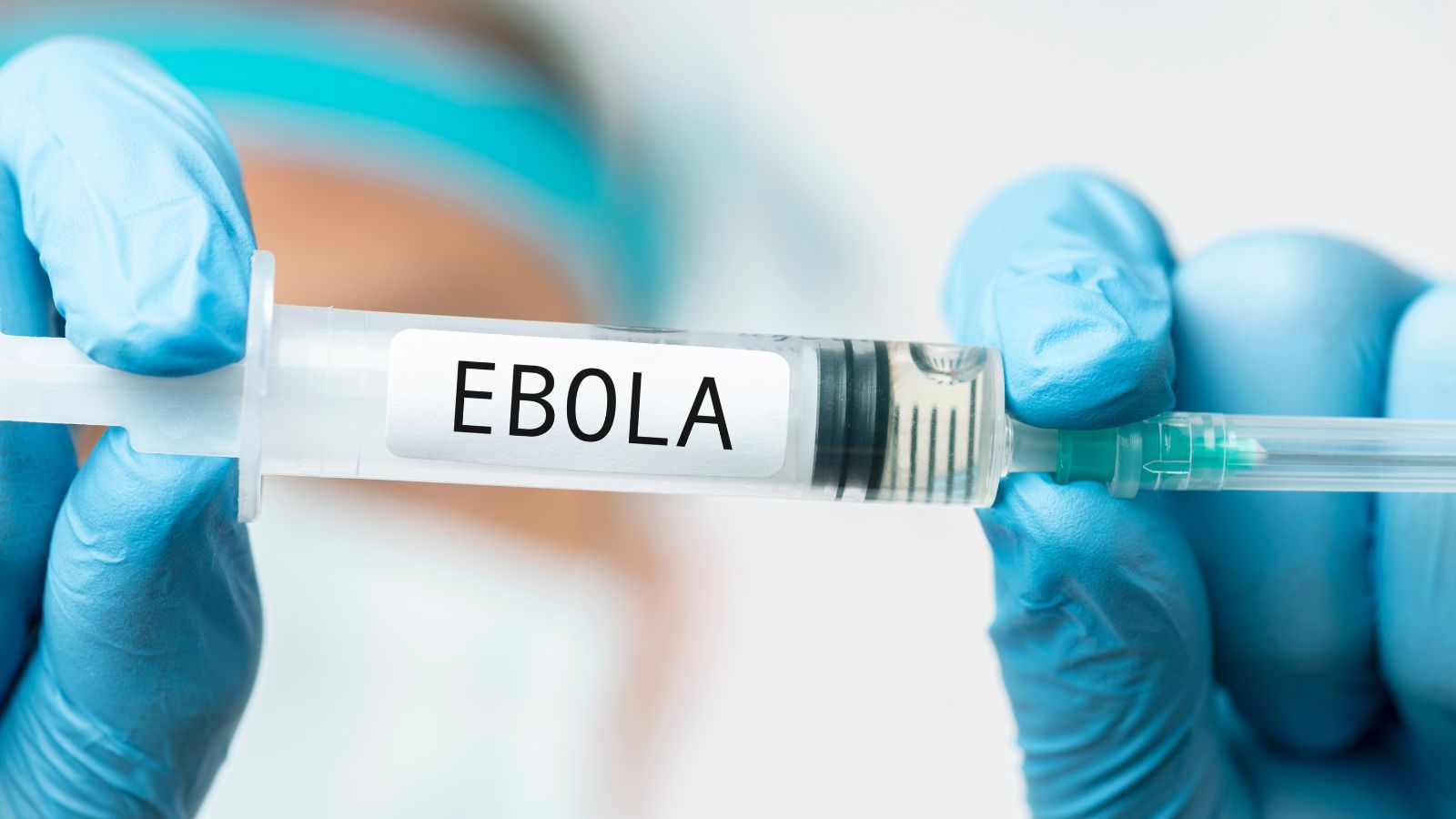
Trust is the only currency that matters in a pandemic. You can have the most advanced vaccine in the world—and we do have vaccines now, like the Ervebo shot—but if a father doesn't trust the person holding the syringe, the medicine stays in the vial and the virus keeps moving.
A Geometry of Transmission
The math of an outbreak is cold. We look at the $R_0$ (pronounced R-naught), the basic reproduction number. If the $R_0$ is greater than 1, the fire grows. If it’s less than 1, it eventually flickers out.
$$R_0 = \tau \cdot c \cdot d$$
In this equation, $\tau$ represents the transmissibility (the probability of infection given contact), $c$ is the contact rate, and $d$ is the duration of infectiousness. In the DRC and Uganda, the contact rate is high because of the way life is lived—communal, physical, and interconnected. The duration is long because people often wait days before seeking professional care. To lower the $R_0$, we have to break the variables. We use contact tracing to find everyone who touched an infected person. We use ring vaccination to create a "buffer of immunity" around every known case.
But the math doesn't account for the rebel groups moving through the forest. It doesn't account for a mother who hides her sick son in a back room because she's terrified he will die alone in a sterile hospital ward. These human variables are why the WHO finally declared the emergency. They realized the traditional playbook was being shredded by the reality of the terrain.
The High Cost of Looking Away
We often talk about "containment" as if it’s a physical wall. It isn't. Containment is a fragile web of surveillance and speed. The international community has a habit of "panic and neglect." We see a headline, we pledge a few million dollars, and then we look away when the immediate threat seems to fade from the nightly news.
The hidden cost of this neglect is measured in the collapse of everyday healthcare. When Ebola strikes, everything else stops. Maternal health clinics close. Measles vaccination campaigns are suspended. Malaria treatments go unadministered. For every person Ebola kills directly, the "shadow epidemic" of disrupted healthcare kills many more.
This is why the global emergency designation matters for funding. It’s not just for the moon suits and the high-tech labs. It’s for the basic infrastructure that keeps a society upright while it fights for its life. It’s for the border guards who need infrared thermometers and the community leaders who need to be paid for the dangerous work of educating their neighbors.
The Breath Between Two Worlds
Back at the Mpondwe crossing, the sun is beginning to set, casting long, orange shadows over the queue of people waiting to move between nations. A health worker in a blue apron holds a non-contact thermometer to the forehead of a young girl. For a split second, everything hangs in the balance. The "beep" is clear. Her temperature is normal. She passes through, disappearing into the crowd.
But the worker knows that tomorrow will bring thousands more. They know that somewhere, perhaps fifty miles away or five hundred, someone is waking up with a headache that feels just a little bit different.
The declaration of a global emergency is an admission of our collective vulnerability. It is a reminder that we are only as safe as the most fragile health system in the most remote corner of the map. We are bound together by the air we breathe and the dust we kick up.
The fever hasn't been defeated; it has only been met with a new level of vigilance. The world has decided to pay attention, at least for now. But as the trucks continue to rumble across the border, the question remains whether that attention will last longer than the next news cycle, or if we will leave the people of the DRC and Uganda to walk that metallic-scented dust alone.
The girl on the border doesn't know about the WHO. She doesn't know about $R_0$ or the global emergency funds. She only knows the weight of the basket on her head and the hand of her mother holding hers. In the end, the virus is a predator that preys on exactly that—our need to be close, to touch, and to move.
The line between a local tragedy and a global catastrophe is as thin as the skin on a human wrist. If you listen closely in the quiet of the night in North Kivu, you can almost hear the virus waiting. It is patient. It is persistent. And it is counting on us to forget.