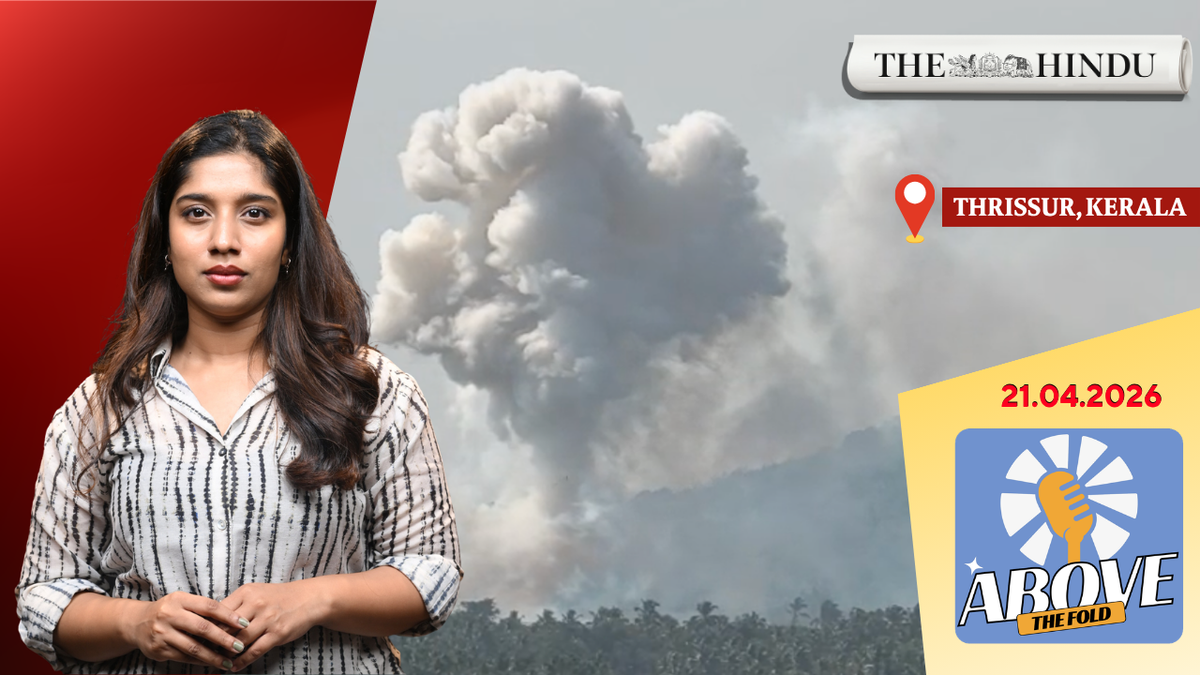
Thirteen workers are dead and at least forty more are nursing charred skin in Kerala hospitals because a shed in Mundathikode could not contain the volatile chemistry of a festival's ambition. On Tuesday, April 21, 2026, a fireworks manufacturing unit preparing for the iconic Thrissur Pooram disintegrated in a series of blasts that felt, to nearby residents, like a tectonic shift. This was not a random act of God. It was the predictable result of a culture that demands grander, louder, and more dangerous pyrotechnics while treating safety protocols as irritating suggestions.
The facility was churning out explosives for the Thiruvambady faction, one of the two main rivals in the Pooram’s central fireworks duel. When the first spark met the stored gunpowder around 3:00 PM, the resulting shockwave didn't just level the building; it sent a secondary explosion ripping through the site while rescuers were already on the ground. This is the brutal reality of the Kerala fireworks industry. It is a sector where the line between traditional celebration and industrial negligence has become dangerously thin.
The Chemistry of Compromise
The Mundathikode unit was rushing to meet the deadline for the "sample fireworks" scheduled for April 24. In the high-stakes world of temple festivals, the pressure to produce "better" noise and light than the opposing faction leads to shortcuts. Investigation into similar past tragedies shows a recurring pattern: improper storage of potassium chlorate, overcrowding of workers in small sheds, and a total lack of climate-controlled environments.
Kerala is currently sweltering under intense heat. When you pack unstable chemical compounds into poorly ventilated shacks during a heatwave, you aren't running a factory; you are tending a bomb. Authorities are currently "investigating" the cause, but the industry veterans already know. It is usually a friction spark, a dropped cigarette, or a chemical reaction triggered by the very humidity and heat the workers are forced to endure to keep the festival on schedule.
The Regulatory Ghost Town
We hear the same script after every blast. The state government promises "strict action." The Health Minister, Veena George, directs hospitals to provide "expert care." But where was the oversight before the smoke started billowing? The Explosives Act is clear on paper, yet its enforcement is a ghost.
- Distance Mandates: Manufacturing units are supposed to maintain strict distances from residential areas.
- Quantity Limits: Licenses specify the maximum amount of gunpowder allowed on-site.
- Structural Integrity: Sheds must be built to vent explosions upward, not outward.
In Mundathikode, the "earthquake" felt kilometers away suggests the volume of explosives far exceeded what any legal license would permit for a temporary prep site. The industry operates on a wink and a nod because the festivals are political and cultural juggernauts. No local official wants to be the one who "canceled the Pooram" by enforcing the law.
A Tradition Addicted to Noise
Just twenty-four hours before this blast, social scientist Rajan Gurukkal called for a ban on high-decibel fireworks. He wasn't just worried about the eardrums of newborns in nearby NICUs; he was pointing at the systemic danger of an aesthetic built on raw power. The traditional iron pipe crackers, or kathina vedi, are relics of a different era. Today, we have the technology for cold spark systems that provide the visual thrill without the body count.
But the "Pooram purists" resist. They want the bone-shaking thump that only tons of gunpowder can provide. They argue that the noise is the soul of the event.
Thirteen families would likely disagree. The victims in these blasts are rarely the wealthy temple committee members or the politicians who inaugurate the events. They are daily-wage laborers, often from marginalized backgrounds, working for a pittance in sheds that are essentially tinderboxes. When the unit at Mundathikode blew, it didn't just kill people; it exposed the parasitic relationship between the spectacle we love and the lives we are willing to discard for it.
The Virudhunagar Connection
This isn't an isolated Kerala problem. Only two days ago, twenty-five people were killed in a similar blast in Virudhunagar, Tamil Nadu. The entire southern fireworks belt is currently in a state of terminal failure. We are seeing a race to the bottom where safety is sacrificed for speed and profit. If a factory in Tamil Nadu blows up on Sunday and a unit in Kerala disintegrates on Tuesday, the problem isn't "bad luck." The problem is a total collapse of industrial governance.
Drones are now flying over the ruins in Mundathikode to locate missing limbs and assess the wreckage. This is what modern festival preparation looks like in 2026. We use high-tech surveillance to count the dead because we refuse to use basic common sense to keep the living safe.
The state must stop treating these incidents as individual accidents. They are corporate homicides. Until the temple Devaswoms are held legally and financially liable for the safety of the contractors they hire, the sheds will keep exploding. Until a license to manufacture fireworks is as hard to get and maintain as a license to operate a nuclear plant, the blood price of Thrissur Pooram will continue to rise.
If the "sample fireworks" go off on April 24 as planned, the crowds will cheer. They will look at the sky and marvel at the colors. But the ground in Mundathikode is still hot, and the smell of sulfur hasn't yet masked the scent of burnt flesh. That is the real display.
Stop looking at the sky and start looking at the sheds.