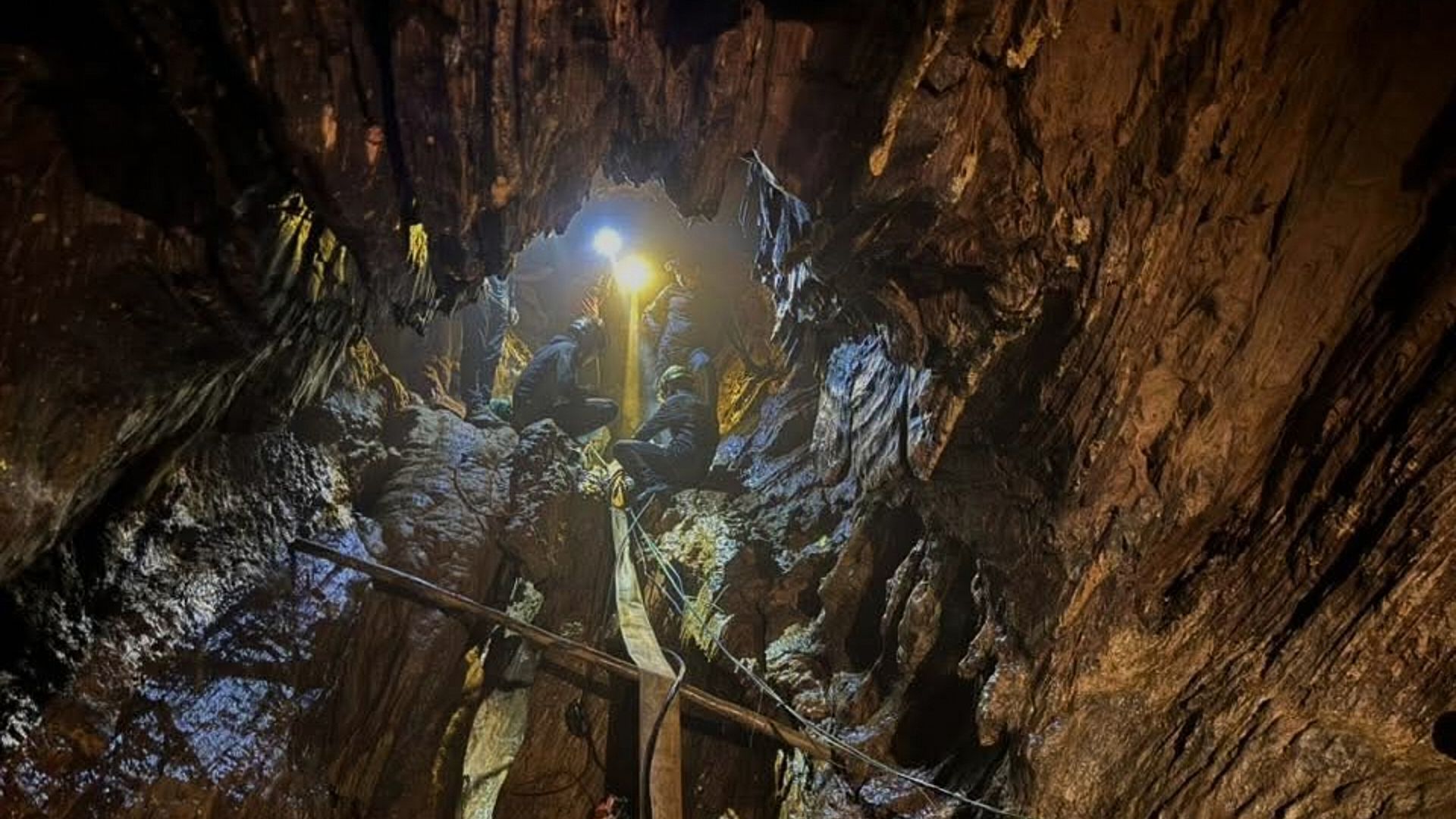
The media is running its standard playbook on the missing persons case in the flooded cave system in Laos. Heavy rain is moving in. The headlines scream that the weather is "threatening to delay" the search. The narrative is set: nature is the villain, the rescuers are helpless victims of meteorology, and we must all wait out the storm.
It is a lazy, comforting consensus. It is also entirely wrong.
Blaming the rain for halting a cave rescue is a fundamental misunderstanding of subterranean operations. Rain does not stop a competent rescue. The failure to predict, map, and aggressively manage the hydraulics of a karst system before the clouds even form is what stops a rescue.
When operations stall in a flooded cave, it is rarely because a sudden downpour caught everyone by surprise. It happens because the command structure treated a highly predictable geological plumbing system like an unpredictable whim of the gods.
The Illusion of the Unpredictable Flood
The mainstream press covers cave flooding as if it is an anomalous flash flood on a desert highway. They look at the sky, see rain, and declare the site inaccessible.
Having spent years analyzing remote logistics and risk management in high-stakes environments, I can tell you that the real bottleneck is never the water falling from the sky. The bottleneck is the gap between data collection and operational execution.
A cave is not an open bucket. It is a complex network of limestone pipes, catchments, and pressure valves.
[Surface Rainfall]
       │
       ▼
[Catchment Area] ───(Infiltration Rate)───► [Epikarst Storage]
                                                    │
                                                    ▼
[Active Rescuer Zone] ◄───(Hydrograph Delay)─── [Cave Conduit]
Every karst formation has a measurable hydrograph delay. If three inches of rain fall on a mountain in Southeast Asia, that water does not instantly manifest in the deep chambers. It takes hours, sometimes days, to percolate through the epikarst layer and fill the lower conduits.
When a rescue team says they are delaying a search because it started raining an hour ago, they are usually exposing a deeper failure. They either do not know the system's lag time, or they failed to deploy the necessary high-capacity submersible pumps when the weather was clear.
Stop asking when the rain will stop. Start asking why the hydrology mapping was not completed on day one.
The Myth of the Waiting Game
The standard advice in these scenarios is always the same: wait for the water levels to recede. It sounds prudent. It sounds safe.
It is actually a death sentence for those trapped inside.
In cave rescue, time is a depleting asset. Hypothermia, rising carbon dioxide levels, and psychological panic do not pause when the rescue squad retreats to the tents to drink coffee and wait for blue skies.
The Harsh Reality of Subterranean Survival
- Air Quality Depletion: Trapped individuals in sealed air pockets consume oxygen and generate $CO_2$. Once $CO_2$ levels in an enclosed chamber cross 5%, cognitive function plummets. At 10%, unconsciousness and death follow swiftly.
- Hypothermia in the Tropics: Do not let the Southeast Asian climate fool you. Deep cave systems maintain a constant, chilly temperature equal to the region's annual average, often coupled with 100% humidity. Standing water saps body heat 25 times faster than air.
- The False Security of Pumping: Relying solely on pumping water out of an unsealed cave system during monsoon season is like trying to drain the ocean with a thimble.
If the strategy is to wait for dry conditions in a tropical monsoon belt, you are not running a rescue operation. You are running a recovery operation with a delayed start date.
Logistics Over Heroics
We love the narrative of the heroic diver plunging into the murky depths against all odds. It makes for great television. But real, effective rescue work is profoundly boring, highly technical logistics.
The British Cave Rescue Council (BCRC) and elite diving groups have proven time and again that success depends on brutal, methodical preparation, not waiting for perfect weather.
When Thai authorities, alongside international experts, pulled off the Tham Luang rescue, they did not do it by staring at the clouds. They did it by executing an aggressive, multi-pronged engineering assault. They diverted rivers on the surface before the water could even enter the mountain. They drilled directly into suspected chambers. They used industrial-grade static lines and staged hundreds of oxygen tanks along the route.
If a rescue in Laos is stalled, look at the logistical supply chain, not the barometric pressure.
Are the surface divers trained in zero-visibility, high-flow environments? Have local authorities successfully identified and plugged the surface sinkholes feeding the cave stream? If the answer is no, then the rain is just a convenient excuse for an under-prepared command center.
Dismantling the Public Misconceptions
Let's address the flawed premises that always dominate the comment sections and news feeds during these crises.
"Why can't they just use military drones to scout the flooded passages?"
This is a classic tech-bro fantasy. Radio waves do not travel through solid limestone and water. Even low-frequency signals degrade within a few meters. Underwater drones (AUVs) require tethering or pre-mapped paths, both of which are useless in an uncharted, debris-choked cave during a high-flow event. Human divers feeling their way inch by inch along a guideline remain the only viable option.
"Shouldn't they wait until the water clears up so visibility is better?"
Waiting for clarity in a dynamic cave system is an illusion. The moment a diver kicks their fins, silt from the floor gets kicked up, reducing visibility to absolute zero within seconds. Experienced cave divers operate entirely by touch and muscle memory. Turbid water is standard operating procedure, not a reason to call off a dive.
The Brutal Operational Trade-off
There is a dark truth that nobody in official command likes to admit publicly: you must be willing to accept the loss of a rescue asset to save the victim, or you must call off the mission entirely.
Tragically, we saw this with the death of Saman Kunan at Tham Luang. Trying to strike a middle ground—sending divers in half-measures while constantly pulling them back the moment a drizzle starts—achieves nothing. It risks lives without the payoff of a sustained, advancing forward line.
If the risk profile is deemed too high because of the water volume, then call the mission off and tell the families the truth. But do not blame the rain for a tactical stalemate. The rain is a fixed geographical constant of the region. The inability to adapt the operational plan to that constant is the real human error.
Pack up the media tents, stop watching the weather radar, and either deploy the heavy engineering assets required to alter the mountain's hydrology, or admit that the command structure lacks the capability to move forward. Anything else is just performance theater while the clock runs out.


