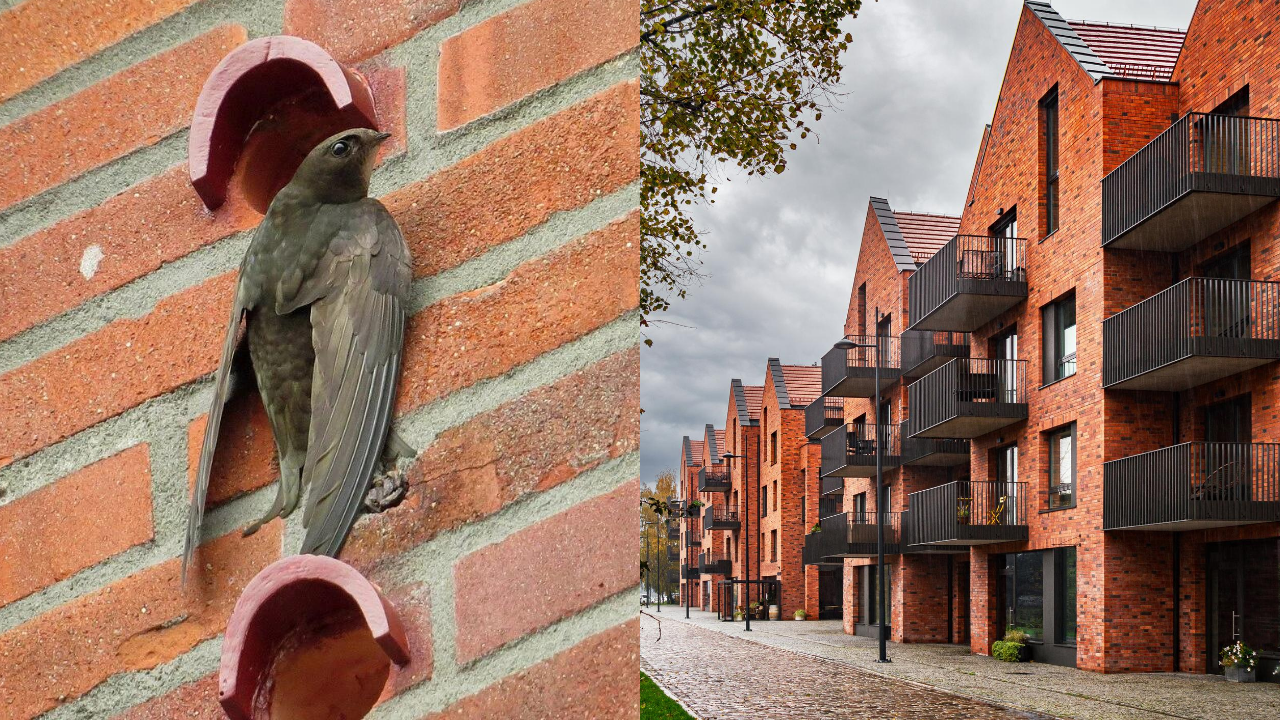
The modern built environment operates as an ecological filter, systematically eliminating structural niches required by cavity-nesting species. The passage of the Natural Environment (Scotland) Bill marks a fundamental shift in civil engineering and building standards by converting a voluntary conservation ideal into a statutory design constraint. By mandating the integration of hollow nesting cavities, colloquially termed swift bricks, into all new developments where reasonably practicable from 2027, the legislation attempts to address an acute ecological collapse through a distributed micro-architectural intervention.
To evaluate the viability of this intervention, the problem must be deconstructed not as an emotional conservation campaign, but as a structural and economic optimization problem. The core crisis is a direct consequence of historical technical debt in construction methodology. For centuries, urban bird populations relied on the structural inefficiencies of traditional masonry and roofing. The systemic decline of the swift population—which has dropped by approximately 60% to two-thirds across the United Kingdom since the mid-1990s—is fundamentally a spatial displacement problem driven by two mechanical vectors.
The Mechanical Drivers of Habitat Deprivation
The primary vector is the evolution of thermal efficiency and weatherproofing standards. Traditional building methods utilized porous, unsealed assemblies. Gaps beneath roof tiles, unpointed stone joints, and exposed eaves functioned as accidental, non-engineered nesting chambers. Modern building envelopes, driven by stringent net-zero carbon targets and moisture-ingress prevention, demand continuous insulation barriers and airtight membranes. The systematic sealing of these entry points eliminates the physical volume required for reproduction.
The second vector is the asymmetric rate of urban asset modernization. As older, structurally inefficient buildings are demolished or undergo energy-efficiency retrofits, the total volume of legacy nesting cavities decreases. Because swifts exhibit extreme philopatry, returning precisely to the same geographic nesting site annually after migrating from sub-Saharan Africa, the sudden elimination of a legacy cavity during winter renovations creates a reproductive bottleneck. The bird does not dynamically scout new geographic regions; instead, it experiences zero-rate reproductive output for that breeding cycle.
The Economic and Operational Cost Function
Traditional conservation relies on retrofitted external timber or plastic nest boxes. This approach fails at scale due to an unsustainable operational cost function. External fixtures suffer from accelerated material degradation due to UV exposure and wind loading, requiring replacement cycles every 10 to 15 years. Furthermore, retrofitting boxes onto existing vertical assets incurs high capital expenditure via scaffolding, specialist labor, and ongoing maintenance liability.
The integrated masonry solution alters this cost equation by transferring the asset class from an external fixture to a load-bearing or facing architectural component. The economics of the integrated brick are defined by three distinct variables:
- Capital Expenditure (CapEx) Efficiency: The raw material cost of an integrated polyolefin or pre-cast concrete swift brick is nominally £30 to £35. When integrated into the initial construction phase, the marginal labor cost approaches zero, as the unit replaces a standard facing brick within the existing mason’s workflow.
- Lifecycle Longevity: Because the nesting cavity is enveloped by the primary structural wall, its operational lifespan matches that of the building envelope itself, typically exceeding 60 years. This eliminates the operational expenditure (OpEx) of maintenance, inspection, and replacement.
- Volumetric Allocation: The internal dimensions of a standard unit (typically $320\text{ mm} \times 140\text{ mm} \times 140\text{ mm}$) exploit the deep wall cavities required by modern insulation standards, meaning the infrastructure occupies dead space within the envelope without compromising internal floor area or structural integrity.
Policy Failure and the Compliance Gap
The divergence in policy execution between the Scottish Parliament and the Westminster framework for England illustrates the difference between statutory mandates and voluntary guidelines. England opted to integrate swift bricks into its National Planning Policy Framework as a non-statutory planning guidance preference rather than a hard legislative requirement.
The breakdown of voluntary or planning-conditioned conservation measures is well-documented. Data from a University of Sheffield study reveals that approximately 75% of bird and bat boxes mandated purely through local planning conditions were never actually installed during the construction phase. This compliance gap exists because non-statutory conditions lack rigorous enforcement mechanisms, clear site-inspection protocols, and punitive legal consequences for non-compliance. Developers operating on tight margins systematically optimize out components that carry administrative or supply-chain friction unless checked by building control sign-offs.
By incorporating the mandate directly into the building standards via a 12-month consultation period leading into 2027, the Scottish legislative design closes this compliance gap. The requirement shifts from a negotiable planning condition to an objective checklist item for a building warrant. A developer cannot achieve practical completion or clear building regulations without demonstrating that the physical assets have been integrated into the masonry layout.
Structural Constraints and Technical Disclaimers
While the legislative strategy is soundly rooted in spatial economics, its real-world execution faces distinct engineering and biological limitations that prevent it from being a singular solution to urban biodiversity loss.
The first limitation is the spatial mismatch between new development zones and historical avian foraging corridors. New housing developments are frequently concentrated in suburban greenfield sites or peripheral industrial rezonations. Swifts, conversely, are historically anchored to dense urban centers where aerial insect biomes are established over mature canopy trees and older, low-velocity waterways. Placing infrastructure in geographic zones devoid of established populations yields zero short-term utility, as the birds do not actively seek out new peripheral territories unless driven by extreme density pressures.
The second limitation is structural compatibility across varied construction typologies. While easily integrated into traditional brick-and-block or rainscreen cladding systems, integrating hollow voids into light-gauge steel framing (LGSF), high-density glass curtain walling, or cross-laminated timber (CLT) systems requires highly customized structural headers. Forcing a hollow void into a structural insulated panel (SIP) compromises the continuity of the thermal envelope, potentially introducing local thermal bridging and moisture condensation points if not engineered with precision insulation sleeves.
Finally, the target asset is highly vulnerable to competitive exclusion. Swift bricks are non-discriminatory cavities; they cannot differentiate between species. In urban ecosystems, aggressive, non-migratory resident species such as house sparrows (Passer domesticus) and European starlings (Sturnus vulgaris) occupy available cavities earlier in the spring season, long before migratory swifts arrive in May. Consequently, a significant percentage of installed assets will inevitably be co-opted by alternative cavity-nesters. While this still supports broader urban biodiversity, it dilutes the specific conservation yield calculated for the red-listed swift population.
Engineering Protocols for Maximum Yield
To mitigate these limitations and maximize the biological return on investment, the deployment of this infrastructure must follow strict spatial and mechanical protocols rather than random distribution across a facade.
First, units must be installed at a minimum height of 5 meters above ground level. This structural height requirement is dictated by the unique morphology of the swift, which possesses exceptionally long wings and highly reduced leg structures, preventing it from taking off from flat ground. The bird requires a vertical drop clearance to gain initial aerodynamic lift.
Second, the structural placement must prioritize northern, eastern, or deeply shaded aspects under eaves. Unshaded southern or western exposures introduce severe thermal performance risks. During peak summer heatwaves, uninsulated facing bricks absorb intense solar radiation, causing internal cavity temperatures to exceed critical thresholds, which leads to nest desertion or lethal heat stress for hyper-metabolic chicks.
Third, spatial cluster geometry must dictate the installation pattern. Swifts are colonial nesters; isolated single bricks have vastly lower colonization rates than grouped arrays. Developers should concentrate units in clusters of three to six per gable end, spaced at minimum intervals of 1 meter to prevent territorial confusion while maintaining the acoustics of a colonial settlement.
The Strategic Play
For asset managers, master planners, and Tier 1 contractors operating within the UK construction sector, the transition from voluntary biodiversity additions to mandatory building fabric integration requires an immediate operational adjustments program. Rather than treating the 2027 Scottish mandate as an isolated regional regulation, forward-looking developers must standardize integrated cavity components across all design templates globally.
The optimal strategic move requires the procurement department to secure direct supply contracts with primary masonry manufacturers to standardize pre-fabricated composite swift bricks directly into the standard architectural block libraries (BIM models). By embedding these components into the early-stage digital twin models of projects, structural engineers can calculate thermal performance and lintel load paths well ahead of site deployment. This proactive integration removes the risk of late-stage redesigns, minimizes supply chain disruptions, and positions the developer to meet the escalating biodiversity net gain metrics that are rapidly becoming standard across international regulatory frameworks.



:max_bytes(150000):strip_icc():focal(665x0:667x2)/gettyimages-50733149-2000-8b129a2475974982a915418ce92a73d8.jpg)