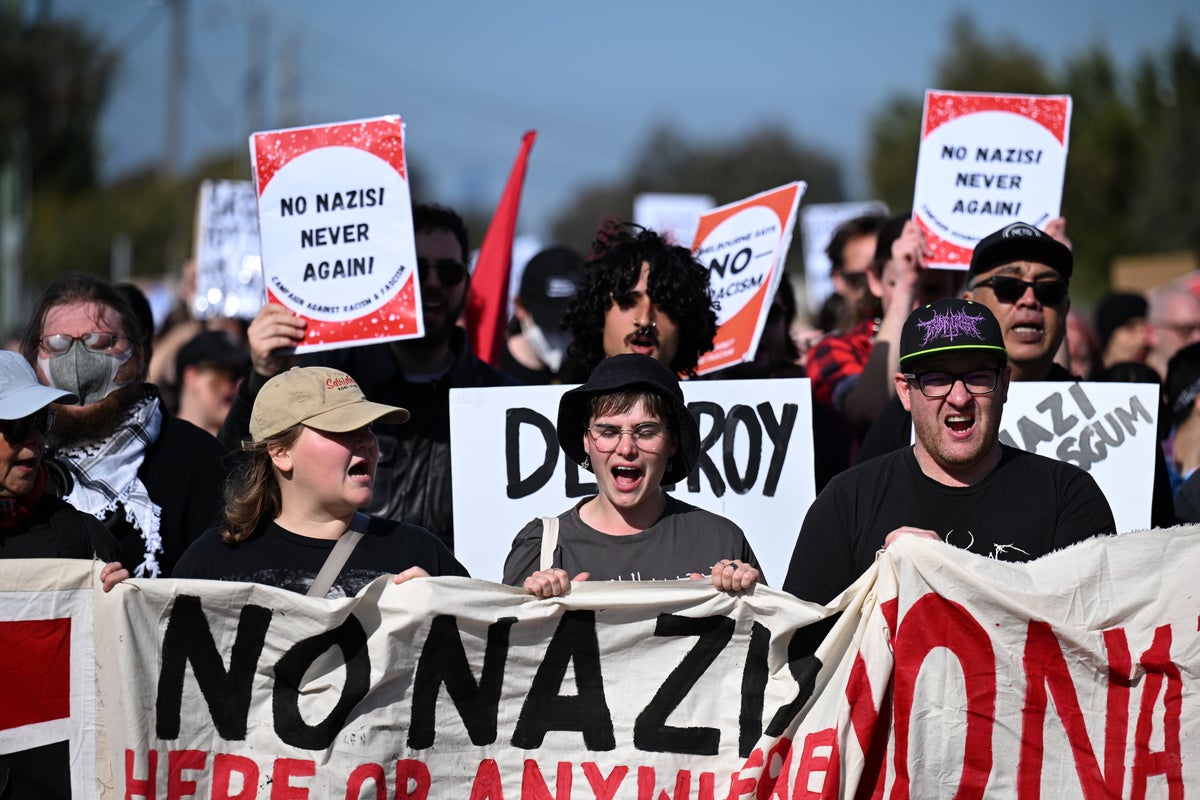
Australia finally pulled the trigger. The federal government officially banned the National Socialist Network, the country's most prominent white supremacist group, under brand new criminal code changes. If you join, fund, or even train with them now, you're looking at up to 15 years in prison.
It sounds like a decisive victory. But if you think a piece of paper in Canberra will magically clear neo-Nazis off Australian streets, you're being naive.
Home Affairs Minister Tony Burke announced the ban to stop horrific, bigoted rallies. The law itself was rushed through parliament after the devastating December 2025 Bondi Beach terror attack, where an antisemitic assault on a Hanukkah celebration left 15 people dead. Public fury demanded immediate action. The government delivered a new legislative tool to outlaw "hate groups" that previously dodged terror labels by operating in what intelligence agencies called a "lawful but awful" space.
But here's the reality check. Extremist networks don't just pack up and go home because a politician signs a decree. They change shapes.
The Myth of the Voluntary Disbandment
When the legislation was first proposed during a special sitting of parliament, the National Socialist Network, led by Thomas Sewell, claimed they were disbanding voluntarily. They put out statements saying their co-projects, including the European Australian Movement and the White Australia Party, were finished.
It was a classic shell game.
They didn't stop. They just altered their corporate structure. Burke explicitly noted that the group "phoenixed," re-emerging under the name White Australia while keeping the exact same personnel, tactics, and white supremacist ideology.
The new laws are designed to combat this. The legislation allows the government to use regulations to immediately loop in any group judged to be a continuation of a banned organization. You don't have to wait months to pass a new law every time they change a letter in their name.
That sounds great on paper, but enforcement in the digital world is messy. These guys aren't filing official paperwork with the government to announce their new names. They operate in encrypted chat rooms, invite-only forums, and decentralized networks. Tracking whether an anonymous online cell is a direct continuation of the National Socialist Network or a "new" independent group of radicalized individuals is an operational nightmare for police.
The High Court Showdown
We didn't even have to wait 48 hours to see the first major flaw in the plan. The ban took effect at midnight on a Friday. By Sunday night, a high court challenge was already filed against the commonwealth.
Matthew Hopkins, a solicitor who has represented Sewell in the past, filed court documents arguing that the new hate laws violate the Australian constitution. The core of their argument relies on two main points.
- The laws burden the implied freedom of governmental and political communication.
- The legislation hands punitive, criminalizing power to the executive branch without a judicial review process.
Sewell's legal filing claims the provisions operate as a "doorway to tyranny" by allowing the government to ban political opponents. It's an aggressive defensive play, and honestly, it puts the government in a tough spot. Australia doesn't have a constitutional bill of rights, but the High Court has fiercely protected the implied freedom of political communication in the past. If the court decides the government overreached, the entire legislative framework could collapse.
Lawful But Awful and the Double Standard Debate
Before these laws passed, organizations like the National Socialist Network and the radical Islamist group Hizb ut-Tahrir—which was the first group banned under these new laws—lived in a legal gray area. The Australian Security Intelligence Organisation (ASIO) watched them closely but couldn't label them terrorist organizations because they didn't explicitly advocate for the violent overthrow of the government or stick to traditional definitions of terrorism. They were just, as ASIO chief Mike Burgess put it, "lawful but awful."
The Executive Council of Australian Jewry has been begging for these laws since 2021. They pointed out that far-right groups use social media to groom and recruit lonely, impressionable young men using the exact same playbook as ISIS.
But the rapid passage of these laws has created massive political friction. The political fallout is real.
- The Coalition splits: The Nationals broke away from the Liberals to oppose aspects of the bill during the late-night Senate debates.
- The Greens raise red flags: Members of the Greens argued that the wording is so broad that legitimate criticism of foreign leaders, like Benjamin Netanyahu, could technically be weaponized as a criminal offense under the hate speech clauses.
- Civil liberties concerns: Teachers unions and civil rights advocates in places like New South Wales are already warning that the sweeping nature of these new anti-hate directives is stifling normal, necessary classroom debates about international conflicts like Gaza.
When you create a law that allows the executive government to criminalize an entire group based on advice from an intelligence agency, you skip the open courtroom. That makes civil libertarians deeply uncomfortable, regardless of how detestable the target group is.
What Happens Next on the Streets
If you live in Australia, don't expect the far-right to vanish from your social feeds or your city squares overnight. Banning an organization doesn't ban the belief system.
Security experts who monitor these movements know that formal bans often push members into smaller, tighter, and more dangerous underground cells. When you take away their ability to hold public rallies legally, you lose the ability to monitor them in the open. They stop carrying banners and start organizing actions that don't leave a paper trail.
If you want to see how these laws actually perform, you need to watch three specific areas over the next few months.
First, watch the High Court. If the judiciary upholds the challenge from Sewell and the White Australia Party, the federal government will be forced back to the drawing board, leaving a massive legal vacuum.
Second, watch the police response at local gatherings. Burke warned that anyone attending a rally associated with these people is now taking a massive risk. We will see very quickly if state police forces have the appetite to make mass arrests under these federal criminal codes, or if the fear of 15-year prison sentences actually keeps people home.
Third, look at the recruitment data. The real battle against extremism isn't won by banning names; it's won by disrupting the digital pipelines where young men get radicalized. Until the government finds a way to stop the algorithms that feed hate content to vulnerable teenagers, new cells will keep forming, no matter what laws are passed in Canberra.
Australia Officially Bans Neo-Nazi Organization Under Tough Anti-Hate Laws this video provides additional international broadcast coverage and context regarding the introduction of these counter-extremism laws.