You think you know Barcelona, but you haven't seen it like this. On June 10, 1926, an old man dressed in threadbare clothes was struck by a tram on the streets of the Catalan capital. Because he carried no papers and looked like a beggar, taxicabs refused to take him to the hospital. By the time someone recognized him as Antoni Gaudí, it was too late. He died three days later.
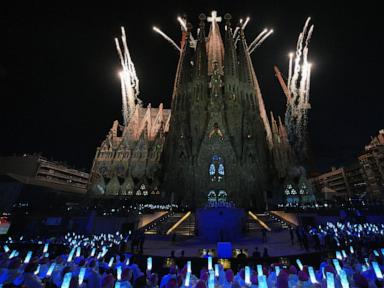
Exactly one hundred years after that tragic intersection of genius and anonymity, Pope Leo XIV touched down in Spain to formally consecrate the newly finished Tower of Jesus Christ at the Sagrada Família. Standing at 172.5 meters, this massive spire officially makes the basilica the tallest church building on Earth. It is a wild, full-circle moment for a structure that has been under construction for 144 years.
Many tourists mistake the Sagrada Família for just another heavily photographed landmark. It is actually a massive theological manuscript written in stone, geometry, and light. The papal visit highlights a legacy that is very much alive, fiercely debated, and still reshaping global architecture.
The Popes Stamp on Catalonia Holy Sites
Pope Leo XIV did not just show up for a ribbon-cutting ceremony. His two-day apostolic journey across Spain targeted places that reveal how Gaudí’s architectural vision tied into the deep, regional spirit of Catalonia.
Before heading into the blinding stained glass of the basilica, the Pope spent his morning outside the city at the Abbey of Our Lady of Montserrat. Perched high in the jagged, sawtooth mountains, this Benedictine complex houses the Black Madonna, the spiritual heart of Catalonia. If you want to understand where Gaudí got his inspiration, you have to look at these mountains. The melted, organic shapes of the peaks at Montserrat are exactly what Gaudí copied when he designed the sandcastle-like spires of his famous church.
The main event happened when the Pope presided over a solemn evening Mass inside the Sagrada Família. This was the moment he officially blessed the monumental Tower of Jesus Christ. The symbolism here is deep. The base of the cathedral was laid in 1882 under Pope Leo XIII. Now, over a century later, his namesake is the one to bless its highest point.
Deciphering the Code of God Architect
People often call Gaudí an eccentric or a madman, but his designs are hyper-rational. He simply used a different textbook: nature.
When you walk into the Sagrada Família, you aren't walking into a cold, dark Gothic cathedral. You're walking into a petrified forest. Gaudí hated straight lines because they do not exist in nature. Instead, he used ruled surfaces, hyperboloids, and paraboloids. The massive columns inside do not just stand there; they branch out at the top like trees to support the ceiling vault, distributing weight far better than traditional stone pillars.
Gaudí was guided by two things: the Gospels and natural law. The exterior façades read like an open bible. The east side shows the textured, chaotic joy of the Nativity, while the stark, bone-like pillars of the west side portray the raw agony of the Passion.
The central towers are structured in a strict spiritual hierarchy:
- Twelve lower spires for the Apostles.
- Four surrounding towers for the Evangelists.
- One star-topped tower honoring the Virgin Mary.
- The massive central spire representing Jesus Christ, capped with a giant cross.
Gaudí possessed an intense humility regarding his timeline. He famously remarked that his "client"—meaning God—was in no hurry. He knew he wouldn't live to see it finished, so he left behind detailed three-dimensional plaster models. When anarchists destroyed his workshop and models during the Spanish Civil War in 1936, architects had to spend decades piecing the broken fragments back together like a puzzle to figure out his intent.
The 2026 Illusion and What Comes Next
There is a huge misconception floating around travel forums right now. Everyone seems to think the Sagrada Família is 100% finished because of the 2026 centenary. It's not.
While the completion of the Tower of Jesus Christ means the central vertical axis and the major exterior silhouette are done, a massive amount of work remains. Construction is now shifting to the Glory Façade on the south side of the building. This section will depict humanity’s path through death, final judgment, and heaven.
This phase involves building a massive monumental staircase over Mallorca Street, which requires demolishing several local residential buildings. It is a logistical nightmare and a major point of political tension in Barcelona. Current estimates put the absolute final completion date closer to 2034.
Experiencing Gaudi Barcelona Beyond the Crowds
Because Barcelona is the 2026 World Capital of Architecture, the city is packed with tourists. If you want to experience Gaudí's genius without getting stuck in a wall of selfie sticks, you need to change your strategy.
Skip the midday rush at Park Güell. Instead, book an evening architectural walk that includes landmarks like Casa Milà (La Pedrera) or Casa Batlló on Passeig de Gràcia. Local sites are running night experiences featuring projection mapping projects that illuminate the organic facades under the stars, showing off the structures exactly how Gaudí intended—as living, breathing organisms.
If you want to understand his early engineering experiments, take a train out to the Colònia Güell. This is an unfinished church in an old industrial village just outside the city. It is where Gaudí tested his famous inverted hanging chain models to figure out how gravity and arches worked. It is quiet, raw, and completely free of the massive crowds found downtown.
To make the most of your visit during this historic centenary year, book your basilica tickets at least two months in advance. Go during the late afternoon when the sun hits the west facade, throwing deep reds and oranges through the stained glass windows. Download the official Sagrada Família app ahead of time to watch the live streams of the papal dedication ceremonies, and then get out into the Catalan hills to see the real mountains that inspired the stone marvels downtown.