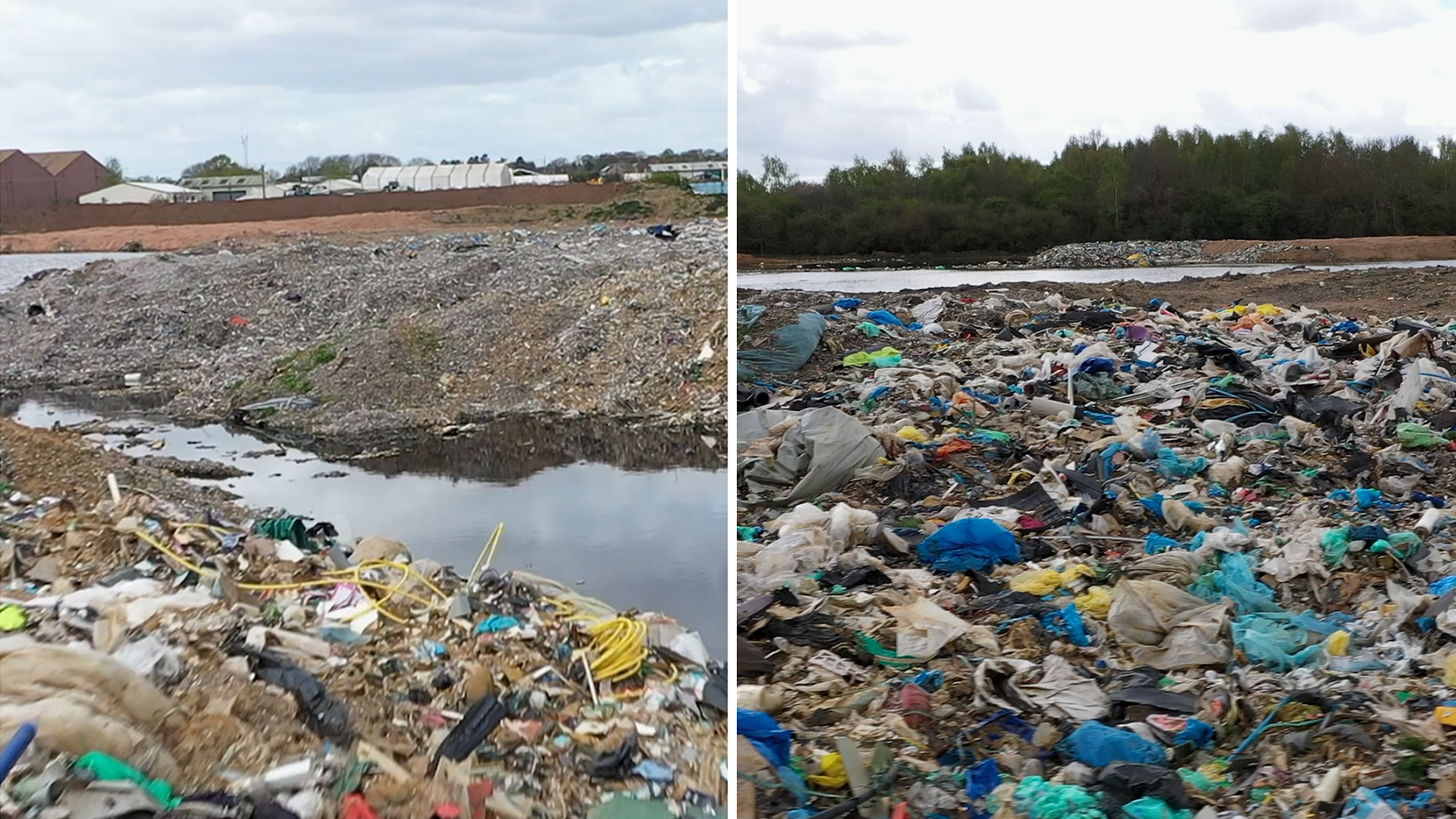
The systemic failure of environmental enforcement is fundamentally an identity problem. For decades, the regulatory framework governing waste management has operated under an administrative honor system. The recent legislative pivot by the Department for Environment, Food and Rural Affairs (Defra)—codified in the Waste Crime Action Plan—acknowledges a structural vulnerability: when a regulatory system cannot definitively verify who is operating within it, the economics of the market will inevitably favor illicit actors.
By replacing the legacy Waste Carrier, Broker, and Dealer (CBD) registration system with a strict environmental permitting regime by 2027, the state is attempting to shift from a reactive, fine-based enforcement model to a proactive, identity-centric barrier to entry. Evaluating this transition requires an objective look at the economic incentives, structural bottlenecks, and data architectures that dictate the waste management sector.
The Economic Incentives of Illicit Arbitrage
To understand why the legacy paper-based CBD registration system failed, one must look at the cost function of waste disposal. Illicit dumping, or fly-tipping, is not merely a localized nuisance; it is a highly rational, profit-maximizing economic activity driven by regulatory arbitrage.
In a legitimate waste supply chain, an operator faces several core expenditures:
- Landfill tax and gate fees at authorized treatment facilities.
- Vehicle compliance, maintenance, and ultra-low emission zone charges.
- Administrative overhead, including environmental insurance and staff training.
An illicit operator eliminates these variables entirely. By charging commercial or residential clients a rate marginally below market value and disposing of the collected material on unauthorized land, the rogue operator captures a near-100% net margin on the transaction, minus marginal fuel costs. The economic cost is externalized onto local authorities and private landowners.
In England, this market distortion manifests at scale: between 2024 and 2025, local councils managed over 1.26 million fly-tipping incidents, with large-scale clearance operations costing individual sites up to £500,000.
The structural flaw of the historical CBD system was its near-zero barrier to entry. Registration required minimal identity verification and no proof of operational competence. The administrative mechanism was so detached from operational reality that dummy registrations—including a widely publicized case where a registration was successfully approved under the identity of a cow—could pass automated processing. Because the Environment Agency (EA) could only react post-incident through lengthy criminal prosecutions, the probability of enforcement was low enough that court fines were absorbed by organized syndicates as a predictable cost of doing business.
The Structural Mechanics of the Environmental Permitting Regime
The updated Waste Crime Action Plan restructures the regulatory perimeter around three distinct pillars: identity verification, technical competence, and digital visibility. This design alters the risk-reward ratio of illegal management, which currently compromises an estimated 20% of all waste in England.
+-------------------------------------------------------------+
|               STRUCTURAL BARRIERS TO ENTRY                  |
+-------------------------------------------------------------+
| 1. Identity Verification   | 2. Technical Competence        |
| - Biometric & background   | - Mandatory online assessments |
| - Financial/record checks  | - Periodic re-certification    |
+----------------------------+--------------------------------+
|               3. Mandatory Digital Tracking                 |
|               - Near real-time ledger audits                |
|               - Serialization of waste loads                |
+-------------------------------------------------------------+
Identity and Background Verification
The core barrier to entry shifts from basic registration to an environmental permit. Under the 2027 mandate, applicants must undergo rigorous background checks, including criminal record reviews and verified identity matching. This directly targets the anonymity layer used by organized criminal networks, which utilize shell companies and rotating directors to shield themselves from asset seizure.
Technical Competence Mandates
Operators will no longer be granted indefinite authority to handle waste based on a one-time fee. The new framework introduces mandatory online competency assessments, testing understanding of hazardous waste handling, duty of care compliance, and environmental safety protocols. Permits must be renewed every three years, establishing a recurring regulatory checkpoint.
Public Accountability and Digital Visibility
Permit holders are legally required to display their unique permit numbers on all public-facing assets, including physical vehicles and digital advertising material. This requirement aims to crowd-source early-stage enforcement by enabling consumers to cross-reference operators against the EA public register.
The Digital Waste Tracking Framework
The operational success of this strategy does not rely solely on identity checks at the point of entry. It depends heavily on the deployment of the mandatory digital waste tracking system, scheduled to become compulsory for receiving sites in October 2026.
This platform replaces easily forged, paper-based waste transfer notes with a centralized digital ledger. By requiring near real-time inputs at every point of transfer—from generation to final disposal—the system creates a closed-loop audit trail.
[Waste Generator] ---> [Transporter (Permit Checked)] ---> [Receiving Facility]
       |                                                         |
       +------------------- Near Real-Time Ledger ---------------+
This digital infrastructure creates a structural bottleneck for illicit actors. If a commercial project generates 50 tonnes of structural debris, that volume is recorded at the point of origin. If the receiving facility only records the arrival of 30 tonnes from the contracted carrier, the system flags a volumetric discrepancy.
This rich data insight allows regulators to move away from legacy, random highway stops toward predictive, algorithmic enforcement. By scanning Office of the Traffic Commissioner data and cross-checking new Heavy Goods Vehicle (HGV) licence applications against active environmental permits, software can automatically flag unpermitted commercial fleets operating in high-risk zones.
Systemic Limitations and Unintended Bottlenecks
While the proposed framework is structurally sound on paper, its real-world execution faces several operational limitations. No regulatory system is entirely friction-free, and introducing high-security barriers always yields secondary economic effects.
The first limitation is the administrative capacity of the regulator. Transitioning hundreds of thousands of registered carriers, brokers, and dealers into a formal permitting system requires massive processing infrastructure. If the onboarding pipeline bottlenecks, legitimate independent operators may face significant delays in securing permits, artificially constricting the legal supply of waste transportation and driving up consumer costs.
The second bottleneck involves the funding mechanism. While the Environment Agency’s enforcement budget has been increased to £15.6 million, the operational funding for processing permits and executing background checks will be drawn directly from fee-paying operators. Higher compliance costs—including mandatory training and recurring permit fees—disproportionately impact small-scale, compliant enterprises while doing nothing to deter criminals who ignore the system entirely.
Furthermore, tightening the regulatory perimeter within the formal system will inevitably accelerate displacement. As the formal system becomes too hostile for unpermitted operators, criminal activity will likely shift completely outside the system into aggressive, midnight fly-tipping or the occupation of derelict land via forced entry. This shifts the enforcement burden away from digital tracking ledger audits back onto physical security, aerial drone surveillance, and localized law enforcement.
The Strategic Path Forward for Waste Operators
For legitimate businesses operating within the waste and logistics sectors, this regulatory shift demands an immediate overhaul of compliance workflows. Survival in a high-scrutiny environment requires treating regulatory data integration as a core operational capability rather than an administrative afterthought.
Firms must audit their sub-contractor networks immediately. Relying on a legacy CBD registration number as proof of a partner's legitimacy will introduce severe liability by 2027. Businesses should implement automated API calls to cross-reference sub-contractor details against the Environment Agency's live database before assigning loads.
Additionally, logistics managers must prepare their technical infrastructure to interface with the mandatory digital waste tracking platform ahead of the October 2026 deadline. Waiting for the mandate to take effect will disrupt supply chains; early adoption of digital waste tracking manifests as a clear competitive advantage when bidding for high-value corporate contracts that demand absolute ESG and legal defensibility.