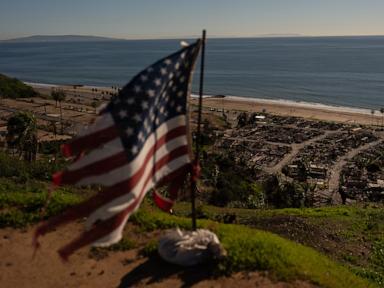
The intersection of environmental catastrophe, criminal intent, and municipal liability creates a volatile evidentiary landscape in federal court. In United States v. Jonathan Rinderknecht, the structural boundaries of criminal culpability are being tested against a backdrop of devastating physical consequences. The case, arising from the January 2025 Palisades Fire which resulted in 12 fatalities and extensive property destruction across Pacific Palisades and Malibu, hinges on a critical scientific and legal phenomenon: the holdover fire.
Understanding the trial requires separating the physical mechanisms of wildfire propagation from the strict rules governing federal criminal equity. The prosecution rests its case on an unbroken chain of causation stretching from an intentional act on New Year’s Day to a historic conflagration a week later. Conversely, the defense seeks to insert a wedge of intervening negligence. A recent pretrial ruling by U.S. District Judge Anne Hwang has drastically narrowed the scope of this dispute, establishing a rigid perimeter around what the jury will be permitted to consider when jury selection begins on June 8, 2026.
The Tri-Partite Indictment and Statutory Framework
The federal government has structured its prosecution of the 29-year-old defendant using three distinct statutory levers under Title 18 of the United States Code. This multi-layered indictment reflects the complex jurisdictional nature of the land impacted by the burn trajectory.
- Destruction of Property by Means of Fire (18 U.S.C. § 844(f)(1)): This charge addresses the destruction of property owned, possessed, or used by the United States or any department or agency thereof. Because the fire eventually consumed federal lands, this statute anchors the federal jurisdiction over what is traditionally a state-level offense.
- Arson Affecting Property Used in Interstate Commerce (18 U.S.C. § 844(i)): This requires proof that the defendant maliciously damaged or destroyed, by means of fire, real or personal property used in interstate commerce or in any activity affecting interstate commerce. The destruction of commercial structures, infrastructure, and rental properties within Malibu and Pacific Palisades satisfies this nexus.
- Timber Set Afire (18 U.S.C. § 1855): This specific environmental statute penalizes anyone who willfully and maliciously sets on fire any timber, underbrush, or grass upon the public domain or upon any lands owned or controlled by the United States.
The penalty structure carries a mandatory minimum sentence of 5 years and a statutory maximum of 45 years in federal prison, illustrating the severity with which federal frameworks treat anthropogenic environmental disasters.
The Causal Chain: The Mechanics of a Holdover Fire
To secure a conviction, the U.S. Attorney’s Office must demonstrate beyond a reasonable doubt that the defendant initiated the spark that directly caused the ultimate destruction. The central challenge of this prosecution is a seven-day temporal gap. The prosecution's narrative connects two events: the Lachman Fire, ignited just after midnight on January 1, 2025, and the Palisades Fire, which flared up on January 7, 2025.
The prosecution relies on the physical mechanism of a holdover fire. In wildland arson, a fire can appear extinguished on the surface while continuing to burn endothermically underground.
[Intentional Surface Spark]
       │ (Jan 1: Lachman Fire)
       ▼
[Subsurface Smoldering]
       │ (Jan 1 - Jan 7: Root Systems & Duff Layers)
       ▼
[Meteorological Trigger]
       │ (Jan 7: High Winds / Low Humidity)
       ▼
[Surface Reignition]
       │ (Palisades Fire Conflagration)
During this subterranean phase, the combustion survives within duff layers, root systems, or buried organic matter. It consumes fuel slowly due to restricted oxygen supply. When external meteorological conditions change—specifically the introduction of high winds, rising temperatures, and dropping relative humidity—the subterranean fire is supplied with oxygen, breaching the surface to initiate rapid, open-air flaming.
The government intends to prove this continuity using an array of forensic and digital tracking methodologies:
- Environmental Sensing Platforms: Data indicating the exact origin time of the Lachman Fire at 12:12 a.m. on January 1, on land managed by the Mountains Recreation and Conservation Authority.
- Telemetry and Geolocation Data: Carrier data placing the defendant’s iPhone within a 30-foot radius of the ignition point at the exact moment of outward propagation, contradicting his initial statements to investigators.
- Physical Fire Dynamics: Analysis of burn patterns, ash composition, and charcoal depth demonstrating that the January 7 outbreak was a physical extension of the subterranean heat signature from the January 1 event, rather than an independent second ignition.
The Defense Strategy and the Intervening Cause Wedge
The defense, led by attorney Steve Haney, operates on a strategy of breaking this causal chain. The core argument introduces an intervening variable: the operational execution of the Los Angeles Fire Department (LAFD).
The defense possesses deposition testimony from a firefighter, a fire captain, and a state park ranger gathered during parallel civil litigation filed by victims against the municipality. This testimony asserts that the New Year’s Day blaze was visibly smoldering when first responders initially cleared the scene, and that hot spots were explicitly reported to supervisors on January 2.
In tort and criminal law, an intervening cause can absolute a defendant of liability if it is deemed a superseding event that breaks the direct line of causation. The defense argument posits that the LAFD had actual knowledge of the ongoing subterranean combustion, possessed a clear municipal duty to suppress it, and failed to do so. Under this framework, the subsequent destruction on January 7 is characterized not as the natural consequence of the January 1 spark, but as the direct consequence of municipal omission.
Pretrial Evidentiary Boundaries: Judge Hwang’s Rulings
The legal battle reached a critical constraint during the May 20, 2026, preliminary and motion hearings. Judge Anne Hwang issued two symmetrical exclusions that significantly reshape the tactical options available to both sides at trial.
Exclusión of Municipal Negligence Testimony
Judge Hwang barred the defense from introducing the depositions of the firefighters and the park ranger regarding the alleged failure to extinguish the January 1 blaze. The court ruled that municipal execution or subsequent negligence is legally irrelevant to the determination of whether the defendant maliciously set the initial fire.
In federal arson jurisprudence, a defendant is generally held liable for the natural and foreseeable consequences of an arsonous act. Because it is entirely foreseeable that a wildland fire might fail to be fully suppressed or might behaviorally elude first responders, municipal failure does not legally sever criminal liability. Allowing the jury to evaluate the tactical performance of the LAFD would risk confusing the core trial issue: whether the defendant initiated the malicious spark.
Exclusion of Synthetic Propensity Evidence
In a parallel restriction targeting the prosecution, Judge Hwang barred the introduction of AI-generated images of a burning city found on the defendant's electronic devices, which had been generated via ChatGPT several months prior to the incident.
The prosecution sought to use these images to establish intent, motive, and a psychological fixation on arsonous outcomes. The court ruled these assets inadmissible under Federal Rule of Evidence 403, concluding that the probative value of synthetic imagery created months prior was substantially outweighed by the danger of unfair prejudice. The images demonstrate thoughts rather than concrete plans, making them highly prejudicial propensity evidence that could lead a jury to convict based on character rather than hard evidence linking the defendant to the physical scene.
The Remaining Evidentiary Matrix
Despite these exclusions, both sides retain significant, highly technical blocks of evidence to present to the jury. The trial will likely become an optimization problem centered on the remaining circumstantial and behavioral indicators.
| Evidence Type | Prosecution Assets | Defense Countermeasures |
|---|---|---|
| Behavioral Metrics | Uber passenger statements from Dec 31 detailing erratic driving and ideological rants targeting capitalism and expressing "resentment of the rich"; subsequent interview statements comparing local demographics to systemic exploitation. | Characterization of statements as protected speech, venting, or unrelated frustration over failed New Year's Eve plans; absence of an explicit threat to burn structures. |
| Digital Footprint | Device forensics showing the defendant recorded video of the initial hilltop area prior to ignition while listening to music themes featuring fire; 911 call sequencing showing calls attempted only when out of cell range, followed by a rapid exit past incoming engines. | Arguments that the defendant acted as a good Samaritan by attempting to report the fire via 911 once he observed it, and that returning to watch the emergency response is common non-criminal curiosity. |
| Forensic Science | Spatial-temporal mapping aligning environmental sensor alerts, cellular tower handshakes, and strict thermodynamic modeling of the holdover timeline. | Introduction of alternative ignition theories, including localized witness reports of fireworks detonations in the immediate vicinity of the trail head during the New Year's matrix. |
The Strategic Play
With the exclusion of the LAFD negligence defense, the defense team must pivot away from blaming the system and focus on exploiting vulnerabilities within the government's circumstantial timeline. Their most viable strategic play is to disrupt the nexus between the defendant and the initial spark at 12:12 a.m.
Because Judge Hwang preserved the defense's ability to discuss the initial fire investigation itself, the defense must aggressively attack the reliability of the environmental sensing platforms and cellular geolocation accuracy margins. If the defense can establish a reasonable doubt that fireworks or an unrelated party caused the initial Jan 1 ignition, the entire structural architecture of the government's holdover theory collapses, irrespective of the defendant’s presence on the trail or his subsequent behavioral anomalies. The prosecution, stripped of its prejudicial synthetic assets, must rely entirely on a clinical, data-driven presentation of cellular telemetry and thermal physics to secure a conviction.