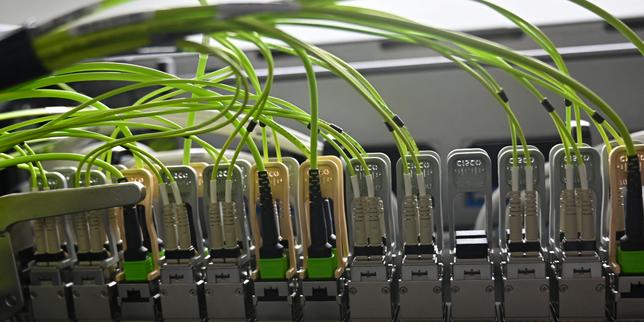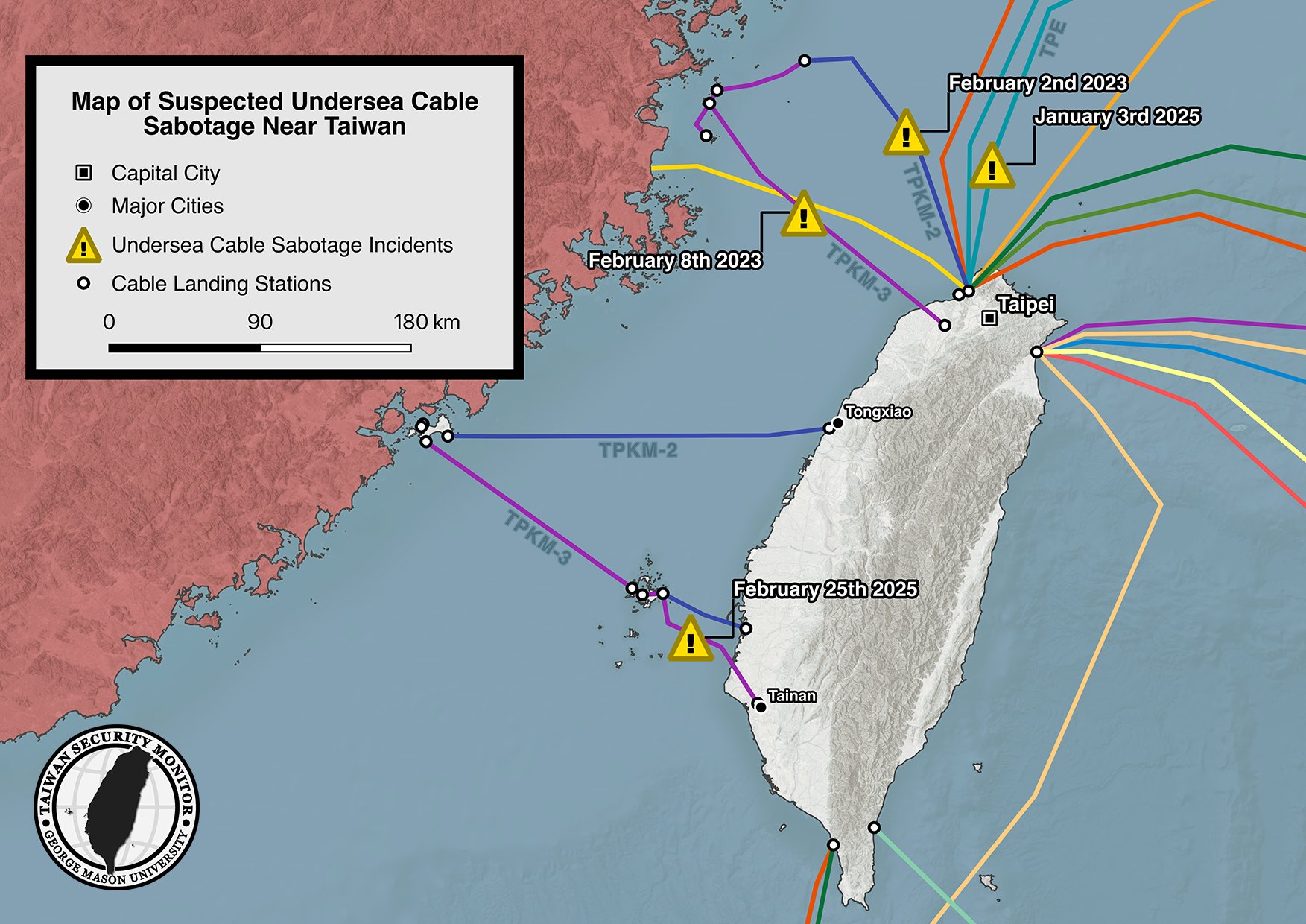
The physical layer of the internet remains highly vulnerable to kinetic operations masked as industrial accidents. When the Hai Hong Gong 66, a Chinese-flagged work barge, partially severed the core wires of the Taiwan-Matsu Subsea Cable No. 3, it followed a precise operational template seen repeatedly in grey zone maneuvers. The event occurred during a salvage operation to retrieve a stranded fishing vessel, the Min Lian Yu 63896, off the coast of Dongyin.
This creates a recurring operational profile where ostensibly commercial or salvage activities overlap geographically with critical communications infrastructure. To evaluate whether these incidents represent isolated mechanical failures or a coordinated strategy of friction, analysts must move past simple attribution and dissect the mechanical, economic, and strategic cost functions at play.
The Tri-Node Vulnerability Framework
Evaluating the security of subsea telecommunications requires breaking the system down into three distinct operational nodes. Risk exposure is not uniform across the network; it concentrates where physical infrastructure interacts with standard maritime operations.
- The Littoral Friction Zone: Shallow waters near landing stations where commercial vessels frequently drop anchor or deploy bottom-trawl fishing gear.
- The Recovery Mechanism Variable: The specific tools utilized during salvage or dredging operations. Industrial grapnels and heavy drag anchors possess the structural mass required to crush armoring and sever fiber optic cores.
- The Redundancy Rerouting Lag: The delta between a physical cable cut and the activation of microwave or satellite backup systems.
In the case of the Taiwan-Matsu No. 3 cable, the Ministry of Digital Affairs executed immediate traffic rerouting, preventing a total blackout. This indicates a hardened network architecture designed to withstand single-point failures. However, network resilience does not negate the primary strategic effect of the cut: the depletion of maintenance resources and the slow degradation of infrastructure.
The Cost Function of Subsea Repair
The true leverage in cable cutting lies not in the immediate disruption of data, but in the extreme asymmetry of repair economics. The cost to damage a cable is effectively zero, absorbed into the normal operating expenses of a commercial or salvage vessel. The cost to repair it is massive, dictated by a specialized global supply chain with severe bottlenecks.
The repair operation for the Taiwan-Matsu No. 3 cable is projected to conclude no earlier than July 2026. This multi-month restoration timeline is driven by three hard constraints:
- Specialized Vessel Scarcity: There are fewer than 60 specialized cable-laying and repair ships globally available for commercial hire.
- Mobilization and Transit Latency: Specialized vessels are rarely stationed near the point of failure. Mobilizing a crew, loading specific fiber replacement stocks, and transiting to the Taiwan Strait requires weeks of lead time.
- Hydrographic and Meteorological Constraints: The waters around Matsu are subject to heavy currents and seasonal weather patterns that frequently suspend precision repair operations.
This creates a massive economic bottleneck for the defender. While traffic can be rerouted through microwave relays or low-Earth orbit satellites, these alternatives offer lower bandwidth and higher latency compared to dedicated fiber. Sustained degradation of these links serves to isolate outlying territories without crossing the threshold of kinetic warfare.
Distinguishing Accident from Attrition
To determine whether the Hai Hong Gong 66 incident was a genuine industrial accident or a deliberate act of grey zone pressure, investigators must look at vessel telemetry rather than intent. Establishing definitive psychological intent in maritime law is notoriously difficult. Instead, analysts must apply a probability model based on operational variables.
A standard commercial salvage operation follows highly predictable geographic patterns. A vessel loitering directly over a mapped cable protection zone while deploying bottom-engaging gear generates a high-risk signature. The Taiwan Coast Guard Administration’s decision to detain the captain and 11 crew members for questioning by the Lienchiang District Prosecutors' Office signals an intent to treat telemetry deviations as actionable offenses rather than standard maritime mishaps.
The primary limitation of this enforcement strategy is scalability. Taiwan's coast guard cannot board and inspect every vessel operating near its 15 subsea cables. This creates a structural blind spot that can be exploited by any actor willing to trade short-term legal detention of a crew for long-term degradation of a target's strategic infrastructure.
The Strategic Play
To counter the weaponization of maritime accidents, infrastructure operators must shift from a reactive posture to a predictive containment strategy. Relying on coast guard interceptions after a cable fault is reported is mathematically guaranteed to fail as a deterrent.
The required strategic pivot is the integration of real-time Automated Identification System (AIS) telemetry with subsea acoustic monitoring. By mapping the exact coordinates of active cables and creating automated trigger zones, defense systems can identify vessels deploying heavy gear or dragging anchors before impact occurs. When a vessel like the Hai Hong Gong 66 enters a designated cable corridor and reduces speed while maintaining high engine load, automated alerts must trigger immediate dispatch of patrol assets to enforce exclusion zones. Without this shift to active, automated spatial defense, the physical layer of the digital economy will remain at the mercy of any anchor or grapnel deployed under the guise of commercial necessity.