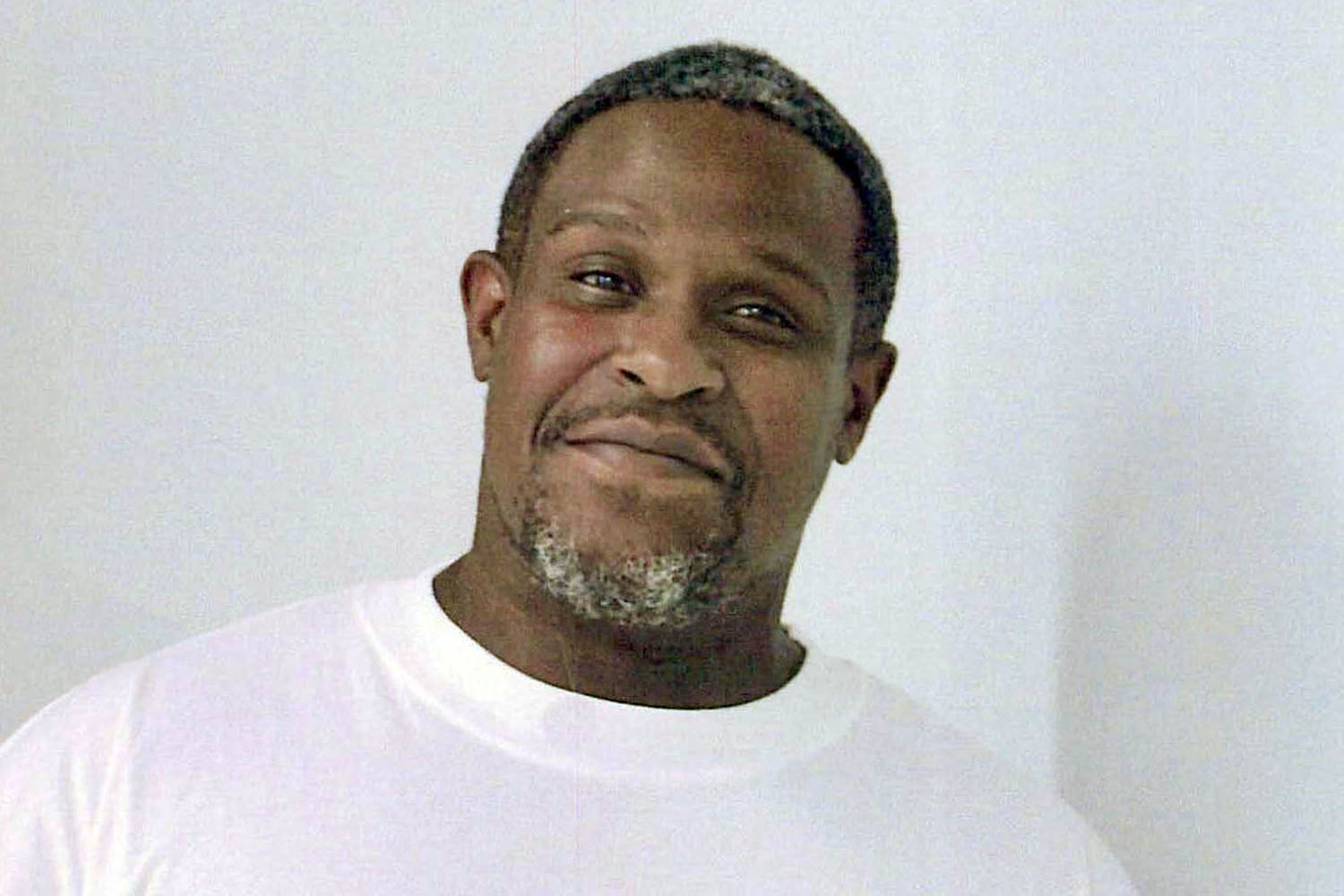
The constitutional mechanism designed to eliminate racial discrimination from American jury selection is failing due to a structural bottleneck in trial-level enforcement. When the Supreme Court of the United States ruled 5-4 in Pitchford v. Cain, it did not simply rule on the fate of a Mississippi death-row inmate; it exposed a critical operational vulnerability in the three-step framework established under Batson v. Kentucky (1986). The majority opinion, authored by Justice Brett Kavanaugh and joined by Chief Justice John Roberts and the liberal bloc, reveals that the breakdown of constitutional protections occurs not from a lack of legal precedent, but from an execution failure at the third stage of judicial review.
To understand why Terry Pitchford’s 2006 capital murder conviction was vacated, one must move past the media's focus on generalized "racial bias" and analyze the precise structural mechanics of the Batson challenge. The law outlines a clear, multi-stage algorithm for testing the validity of a prosecutor's peremptory strikes—strikes that allow attorneys to dismiss prospective jurors without stating a reason.
The Three Pillars of Batson Enforcement
The Batson framework is engineered as a three-step burden-shifting protocol. For the mechanism to function, each component must execute sequentially:
- The Prima Facie Showing: The defense must establish a statistical or behavioral inference that the prosecution exercised peremptory strikes based on race. In Pitchford’s trial, District Attorney Doug Evans used peremptory strikes to eliminate four out of five qualified Black prospective jurors, leaving an 11-white, 1-black jury in a county where the population was 40 percent African American. This satisfied step one.
- The Race-Neutral Explanation: The burden shifts to the prosecution to provide clear, facially race-neutral justifications for the strikes. Here, Evans cited specific granular pretexts: one juror returned fifteen minutes late from lunch, two had brothers with criminal convictions, and a fourth matched the defendant’s demographic profile (young, unmarried, father).
- The Judicial Determinations of Pretext: The trial judge must evaluate the prosecution's stated reasons against the totality of the circumstances to determine if the reasons are authentic or merely a pretext for purposeful discrimination.
The structural failure in Pitchford v. Cain occurred precisely at the transition between step two and step three. The trial judge, Joseph Loper, accepted the prosecutor’s race-neutral explanations immediately, effectively closing the window of surrebuttal for the defense. This procedural shortcut created an unreviewable record, blocking Pitchford’s counsel from conducting a comparative juror analysis—the standard forensic technique used to prove that white jurors with identical characteristics (e.g., family members with criminal records) were retained while Black jurors were systematically purged.
The Prosecutor History Vector and Data-Driven Pretext
A critical flaw in standard appellate review is treating individual trial decisions as isolated data points. The majority opinion in Pitchford corrects this by integrating a historical vector into the step-three assessment. The prosecutor in this case, Doug Evans, possessed a documented, decades-long operational pattern of maximizing Black juror exclusion.
In 2019, the Supreme Court overturned the conviction of Curtis Flowers in Flowers v. Mississippi—a case prosecuted by the exact same District Attorney, Doug Evans, and overseen by the same trial judge, Joseph Loper. In the Flowers litigation, the evidentiary record revealed that Evans had tried Flowers six distinct times for the same crime, relentlessly striking Black jurors at a rate that mathematically defied random distribution.
When analyzing a Batson step-three claim, a prosecutor's historical striking baseline functions as a critical qualitative metric. In Pitchford's case, court records indicated that Evans had actively annotated his juror manifests with "W" and "B" designations. When a trial court fast-tracks step three without allowing the defense to cross-examine or contrast the prosecutor's stated motives against this historical baseline, the judicial system fails to complete its fact-finding objective. Justice Kavanaugh noted that "things broke down," and the necessary step-three determination never actually occurred despite defense counsel’s structural attempts to preserve the objection.
The Asymmetrical Costs of Procedure: AEDPA vs. Structural Error
The sharp divide between the 5-4 majority and the conservative dissent highlights an ongoing structural tension within federal habeas corpus review. The dissent, led by Justice Neil Gorsuch and joined by Justices Thomas, Alito, and Barrett, did not necessarily defend the purity of the jury selection; instead, they focused on the statutory constraints imposed by the Antiterrorism and Effective Death Penalty Act (AEDPA).
Under AEDPA, federal courts operate under a strict deferential standard. A federal court cannot overturn a state court’s criminal conviction unless the state court’s adjudication involved an "unreasonable application of clearly established federal law." The underlying logic of the dissent rests on two systematic arguments:
- The Forfeiture/Waiver Bottleneck: The Mississippi Supreme Court had previously rejected Pitchford’s appeals on the procedural grounds that his defense team had waived their right to fully challenge the strikes by failing to be sufficiently aggressive when the trial judge cut them off. The dissent argued that federal courts must respect this state-level procedural default.
- The High Evidentiary Bar: Gorsuch asserted that for a federal court to intervene, the state court's ruling must be so indefensible that no fair-minded judge could possibly agree with it. Because the trial record showed a chaotic, fast-paced jury selection, the dissent maintained that the state court's finding of waiver was at least plausible, meaning federal intervention exceeded statutory authority.
This creates an operational paradox. If a trial judge rapidly truncates a constitutional inquiry, the resulting record will inherently lack the explicit data points required to clear AEDPA's high threshold on appeal. The majority's willingness to bypass this bottleneck signals an analytical shift: when systemic bad actors (defined by historical prosecution patterns) operate within compressed trial schedules, strict procedural deference must yield to the core constitutional mandate of the Fourteenth Amendment.
Tactical Implications for Capital Defense and Prosecution
The outcome in Pitchford v. Cain establishes an immediate strategic blueprint for criminal trial practice, dictating how both defense counsel and trial judges must log data to survive federal scrutiny.
[Trial Court Batson Failure] ──> [Incomplete Evidentiary Record] ──> [Appellate Affirmation via Deference]
                                                                        │
                                   [Supreme Court Intervention] <───────┘
The first operational requirement falls on defense practitioners. To avoid the procedural waiver trap identified by the dissent, counsel can no longer rely on a simple verbal objection to a peremptory strike. The defense must explicitly demand a distinct, uninterrupted opportunity to build a step-three record immediately after the prosecution offers its race-neutral reasons. This involves a real-time comparative analysis, contrasting struck Black jurors against accepted white jurors to expose asymmetrical standards regarding employment, age, or proximity to crime.
The second operational requirement applies to the trial bench. Trial judges cannot treat Batson objections as administrative checklists to be cleared rapidly. The judge must explicitly articulate their credibility findings on the record for every contested strike. If the judge fails to state why they find a prosecutor's explanation credible in light of the defense's rebuttal, the record becomes structurally defective, rendering any subsequent conviction highly vulnerable to federal vacatur.
This decision creates an immediate logistical liability for state jurisdictions. Pitchford’s capital conviction and death sentence have been invalidated after twenty years of litigation. The state of Mississippi now faces an expensive, resource-intensive retrial of a 2004 capital murder case where evidence has aged, witnesses may be unavailable, and the original prosecutor has retired. This demonstrates that cutting procedural corners during jury selection to optimize short-term trial speed yields massive long-term institutional costs.
The strategic imperative moving forward is clear: state prosecutors must internalize that race-neutral pretexts will face rigorous historical and comparative mapping. If a district attorney's office maintains a statistical legacy of exclusion, its trial-level strikes will be evaluated under a presumption of pretext. To insulate future convictions from structural reversals, trial courts must enforce an absolute separation between the prosecution's statement of reasons and the defense's right to demonstrate systemic bias.