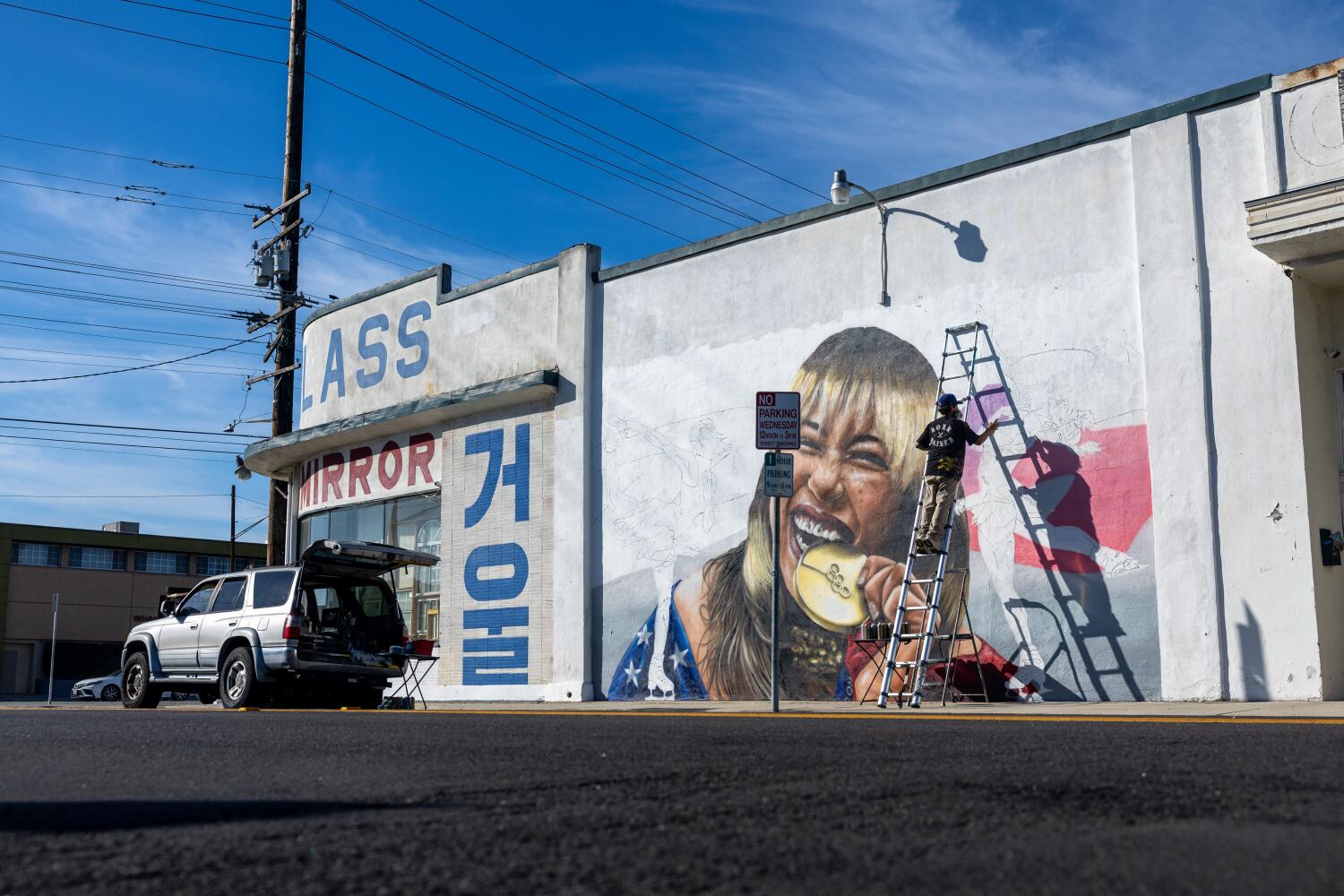
Public art has a nasty habit of lying to you. It happens every time a local government or a brand commissions a tribute to a high-achieving athlete. They hire an artist to slap a face on a brick wall, call it "raw" or "authentic," and then feed you a narrative about how the subject’s struggles are just like yours.
The recent mural dedicated to two-time U.S. figure skating champion Alysa Liu is a textbook example of this manufactured sentimentality. The media narrative surrounding it focuses on the piece being "a little rough around the edges, but beautiful at the same time." It’s a nice sentiment. It’s also a total misunderstanding of what elite athletic performance actually requires.
In the world of Olympic-level figure skating, "rough around the edges" doesn't get you a podium spot. It gets you a face-plant on the ice and a low technical score.
By romanticizing the "roughness" of a mural, we are subtly trying to humanize a process that is, by definition, superhuman and punishingly precise. We are trying to make Liu’s journey relatable when the reality is that her career was built on the absolute rejection of the mediocre "roughness" the rest of us live with every day.
The Fetishization of the Unfinished
Why are we so obsessed with things being "a little rough"?
It’s a psychological safety net. If we can frame an elite athlete’s career through the lens of imperfection, we don't have to feel as bad about our own lack of discipline. We look at a mural with intentional drips and jagged lines and think, See? Even the greats are messy.
No, they aren't. Not where it counts.
Alysa Liu became the youngest woman to win a U.S. senior title at age 13. She was the first American woman to land a quadruple Lutz in competition. Those milestones aren't achieved through "rough edges." They are the result of thousands of hours of obsessive, repetitive, and often agonizing refinement.
When we celebrate "roughness" in a tribute, we are essentially devaluing the very precision that made the athlete worth a mural in the first place. It’s a backhanded compliment wrapped in an aesthetic trend. We are prioritizing the artist's "vision" of struggle over the athlete's reality of mastery.
Why Representation Isn't a Substitute for Results
The "lazy consensus" in sports journalism today is that a mural’s primary job is "inspiring the next generation" through representation. While seeing a young Asian-American woman on a wall in Oakland matters, the mural often becomes a tombstone for the actual work.
I’ve seen cities spend tens of thousands on these "tributes" while the local rinks and training facilities—the places where the next Alysa Liu actually has to sweat—are crumbling or underfunded. We love the symbol; we hate the infrastructure.
If you want to honor an athlete like Liu, you don't do it with a "beautifully rough" painting. You do it by:
- Fundraising for ice time: Figure skating is one of the most cost-prohibitive sports on the planet.
- Addressing the burnout rate: Liu retired at 16, then came back. That’s a story of a broken system, not just a "personal journey."
- Stopping the infantilization: We treat these athletes like ceramic dolls until they fail, then we pivot to calling them "resilient" to cover up the fact that the industry chewed them up.
The mural is a distraction. It allows the community to feel like they’ve "done something" for the athlete without actually addressing the systemic pressures that force 16-year-olds into retirement.
The Performance of Authenticity
The phrase "rough around the edges" is the new corporate buzzword for "we didn't want to pay for a high-fidelity finish." In the art world, this is often a stylistic choice. In the context of sports tributes, it’s a performance of authenticity.
Authenticity isn't a spray-paint drip. Authenticity is the fact that Liu had to land triple axels while her body was changing under the scrutiny of a global audience and a judging system that rewards robots.
There is a fundamental disconnect between the medium and the message here. Figure skating is an aesthetic sport judged on the illusion of ease. The mural tries to show the "grit" by being messy. But the grit in skating is hidden. It’s in the hip injuries, the 5:00 AM ice sessions, and the caloric deficits.
To represent that as "beautifully rough" is to sanitize the sheer violence that elite skating does to a human body. It turns a brutal trade into a Pinterest board.
The Myth of the Relatable Champion
People ask: "Don't these murals make athletes more approachable?"
That is exactly the problem. Why do we need them to be approachable?
The cult of relatability is killing excellence. We want our heroes to be "just like us," but if they were just like us, we wouldn't be building murals for them. Liu’s career—from her record-breaking rise to her sudden retirement and subsequent return—is an outlier. It is a statistical impossibility for the average person.
When we try to find the "roughness" in her story to make it digestible, we lose the awe. We trade inspiration for comfort.
What You Are Actually Looking At
When you see a mural that is "rough but beautiful," you aren't seeing the athlete. You are seeing:
- A marketing department's attempt to capture "urban energy."
- A community's desire for a low-cost morale boost.
- The aestheticization of a struggle that the viewers will never actually have to endure.
If the mural were truly accurate to the experience of a world-class skater, it would be a cold, sharp, and terrifyingly symmetrical piece of work. It wouldn't be "rough." It would be surgical.
Stop Looking at the Wall and Look at the Scorecard
The real tribute to Alysa Liu isn't on a wall in Northern California. It’s in the ISU judging handbooks that had to be reconciled with her technical ceiling. It’s in the way she forced the U.S. Figure Skating association to realize they had a generational talent who didn't fit the "Ice Princess" mold of the 1990s.
We need to stop asking "How does this mural make us feel?" and start asking "Does this mural accurately reflect the cost of the crown?"
The answer is usually no. It makes us feel warm and fuzzy. It makes us feel like perfection is reachable because it looks "messy."
But ice doesn't care about your feelings. It only cares about the angle of your blade and the revolutions of your jump.
The Danger of "Inspirational" Art
There is a dark side to this kind of public art. It creates a narrative that success is a byproduct of "being yourself" and "embracing your flaws."
In elite sports, embracing your flaws is how you lose. You identify your flaws and you eradicate them through brutal repetition. Alysa Liu didn't get to the Olympics by being "rough around the edges." She got there by being sharper than everyone else.
By pushing this "beautifully rough" narrative, we are lying to the kids who look at that wall. We are telling them that the mess is the point. The mess is actually the obstacle. The beauty is what happens when you finally overcome the mess.
The Next Step for Public Tributes
If we are going to continue plastering athletes on walls, we need to drop the "relatability" act.
- Acknowledge the sacrifice: Stop making it look like a fun hobby. Show the exhaustion.
- Dump the clichés: If I see one more "rough" mural described as "authentic," I’m going to lose it.
- Invest in the reality: Use the mural unveiling as a platform to demand better conditions for youth athletes.
Stop pretending that a bit of stylistic grit on a brick wall captures the essence of a girl who spent her childhood spinning at 300 RPM.
Liu’s career wasn't "rough but beautiful." It was a high-speed collision between immense talent and a demanding, often cruel industry. If you can't paint that, don't bother painting at all.
We don't need more "inspiring" murals. We need a more honest conversation about what we demand from our champions before we decide they’ve earned a spot on a wall.
The mural is static. Liu is still moving. That’s the only part of this story that actually matters.
Stop admiring the paint and start respecting the physics.