You probably think your identity is settled. You carry a U.S. passport, you pay taxes to the IRS, and you’ve never lived north of the border. But citizenship laws are weirdly flexible, and for thousands of Americans, the reality is a bit of a shock. You might actually be Canadian.
This isn't about a lifestyle choice or a love for hockey. It’s about the legal concept of citizenship by descent. Canada has some of the most generous—and at times confusing—rules regarding who belongs to the Great White North. If your parents or even your grandparents were born in Canada, you could be a "lost Canadian." These are people who are legally citizens of Canada under the law, even if they’ve never applied for a certificate or held a Canadian passport.
The Canadian government has spent the last decade fixing old laws that stripped people of their rights. If you’ve ignored your family tree, you're potentially leaving a powerful second passport on the table.
The 2009 and 2024 Law Shifts Explained
For a long time, Canada had a "second-generation cut-off." This meant if you were born outside Canada to a Canadian parent who was also born outside Canada, you were out of luck. The line stopped there. It was designed to prevent endless generations of citizens who had no physical connection to the country.
But that changed. A landmark ruling by the Ontario Superior Court of Justice in 2023, known as Bjorkquist et al. v. Attorney General of Canada, declared the second-generation cut-off unconstitutional. The court found it created a "lesser class of citizenship." Basically, it wasn't fair to treat Canadians born abroad differently than those born on Canadian soil.
The government didn't fight it. Instead, they moved toward a "substantial connection" test. If your Canadian parent can prove they spent at least three years in Canada before you were born, the gates swing open. This is a massive shift. It means thousands of Americans who were told "no" five years ago are now looking at a "yes."
How Your Family Tree Dictates Your Passport
Most people get their Canadian citizenship because of where their parents were born. If at least one of your parents was born in Toronto, Vancouver, or even a tiny village in Saskatchewan, you're likely already a citizen. It’s automatic. You don't "become" Canadian; you already are. You just need the paperwork to prove it.
Things get interesting with the "Lost Canadians" group. This group includes people who lost their status due to obscure provisions in the 1947 Citizenship Act. For example, before 1977, Canada didn't really like dual citizenship. If a Canadian became a naturalized U.S. citizen, they often lost their Canadian status.
Recent legislative fixes, specifically Bill C-37 and Bill C-24, restored citizenship to almost everyone who lost it under those old, archaic rules. If your dad moved to New York in the 60s and became a "Yankee," he might have thought he gave up his Canadian soul. He didn't. And that means you didn't lose your claim either.
The Myths About Dual Citizenship
I hear this constantly. People think they have to choose. They worry the U.S. will take away their blue passport if they claim a Canadian one. That's just wrong.
The U.S. Supreme Court settled this decades ago. You can hold dual citizenship. The U.S. doesn't encourage it, but they can't stop you from having it unless you explicitly renounce your U.S. citizenship with the intent to give it up. Canada is perfectly fine with it too.
Having both is basically a cheat code for life. You get to work in the U.S. and live the American dream, but you also have a "get out of jail free" card if you ever want to work in Toronto or retire in Halifax. You get access to a different healthcare system and a different labor market. It’s about options.
The Practical Benefits You’re Overlooking
Why bother with the paperwork? It’s a valid question. If you’re happy in Des Moines, why do you need a certificate from Ottawa?
- Labor Mobility: Under the USMCA (the new NAFTA), it’s easier for professionals to move around, but being a citizen makes it effortless. You can work for any Canadian company without a visa.
- Education Costs: Canadian universities are significantly cheaper than U.S. schools, even for international students. But for citizens? The rates are incredibly low. If you have kids, this could save you six figures in tuition.
- The Safety Net: Life is unpredictable. Having the right to live in a country with a robust social safety net is a high-value insurance policy.
- Consular Protection: If you're traveling in a part of the world where a U.S. passport might make you a target, a Canadian passport is a very handy alternative.
Finding the Paperwork Trail
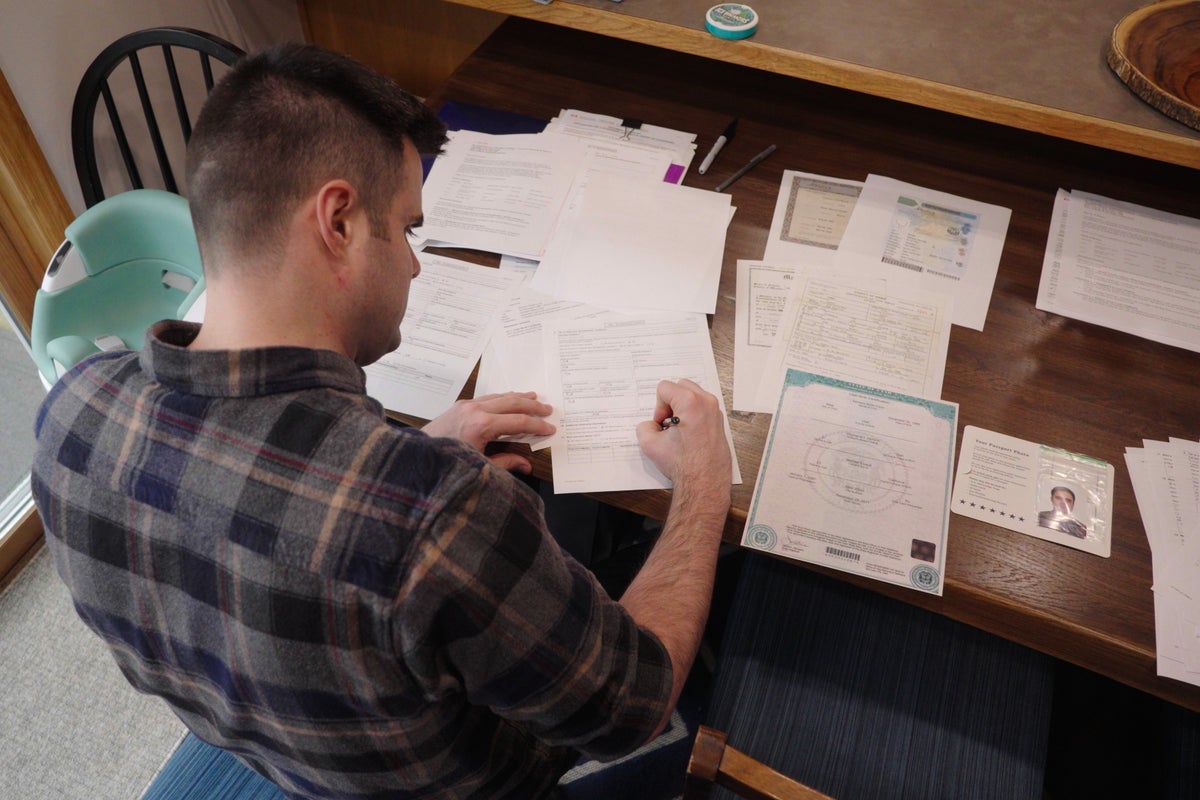
The biggest hurdle isn't the law; it's the records. To claim your citizenship, you need your parent's Canadian birth certificate. If they’ve passed away or you’re estranged, this gets tricky.
You’ll need to deal with provincial vital statistics offices. Each province handles its own records. If your mom was born in Quebec, you’re dealing with the Directeur de l'état civil. If it’s Ontario, it’s ServiceOntario. It’s a bureaucratic slog. Expect wait times. Expect to pay small fees for "certified copies."
Don't bother with genealogy sites like Ancestry.com for the final application. They’re great for clues, but the Canadian government requires official, government-issued documents. You need the "Long Form" birth certificate which includes parental information. The short cards aren't enough anymore.
Common Mistakes in the Application Process
Don't just mail a bunch of random photos to Immigration, Refugees and Citizenship Canada (IRCC). They’ll reject your application faster than a puck on a power play.
First, people often fail to prove the "chain." If your name is Smith but your mother’s Canadian birth certificate says Jones, you need the marriage certificate or legal name change document that connects the two. Every link in the chain must be documented.
Second, the photos. Canada has very specific requirements for citizenship photos. They aren't the same as U.S. passport photos. The dimensions are different, and the photographer has to stamp the back with the date and their studio address. If you go to a standard CVS in the States, they’ll probably give you the wrong size. Find a professional who knows Canadian specs.
What Happens After You Get the Certificate
Once you have your Certificate of Canadian Citizenship, you aren't done. That little paper is your proof, but it isn't a travel document. You then apply for the passport.
One thing people forget is taxes. Unlike the U.S., Canada taxes based on residency, not citizenship. If you’re a Canadian citizen living in Texas, you generally don't owe the Canada Revenue Agency (CRA) a dime. This is a huge advantage over the U.S. system, which hunts down citizens regardless of where they live on the globe. You get the benefits of the citizenship without the tax headache of the U.S. model.
Start Your Audit Today
Stop guessing. If you have a parent who was born in Canada, you owe it to yourself to check your status. Start by asking your parents for their original birth certificates. If they don't have them, go to the provincial website where they were born and order a "certified long-form birth certificate."
Once you have that, head to the official IRCC website and look for the "Application for a Citizenship Certificate." It costs about 75 Canadian dollars. That’s a small price for a second nationality. You might find out that while you’ve been waving the stars and stripes, you’ve actually been a secret Canadian all along.
Gather your documents. Check the dates. Verify the links. The law is currently on your side more than it has been in decades. Don't wait for the policy to shift again. Get your claim in now.