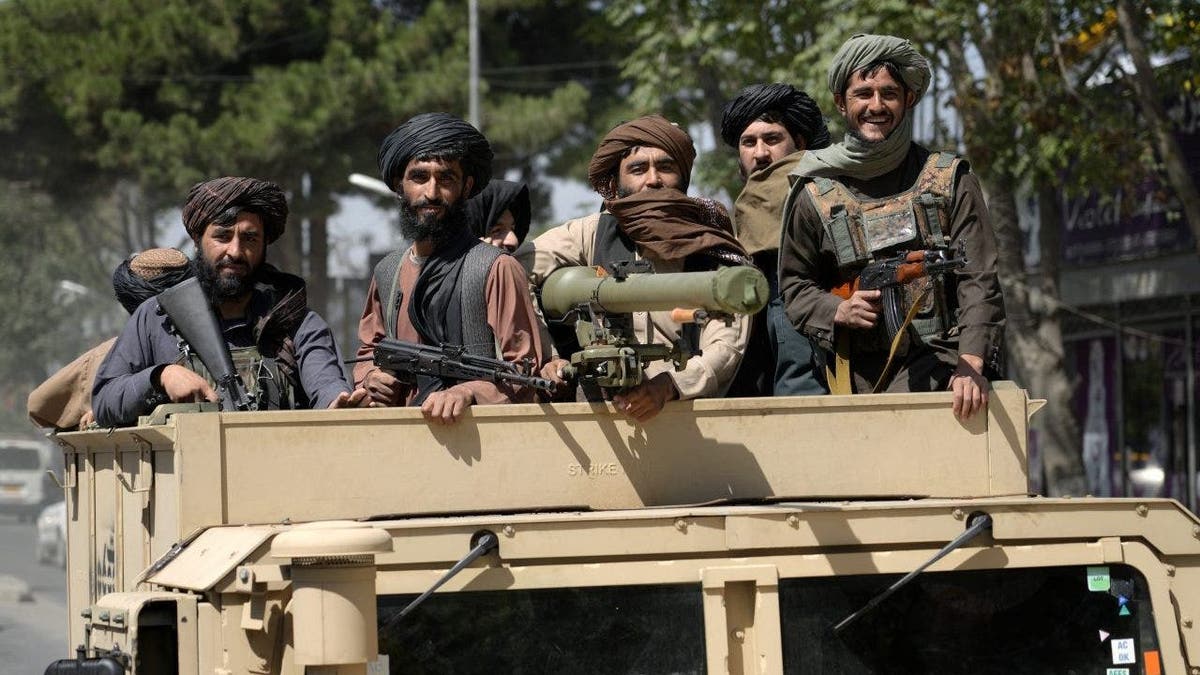
The heavy shelling and rhythmic thud of explosions along the Pakistan-Afghanistan border are no longer isolated skirmishes. This is the sound of a total collapse in security cooperation between two neighbors that were, until recently, viewed as inseparable strategic partners. The surge in violence near the Durand Line represents a fundamental shift in regional stability, moving from localized tribal friction to a full-scale confrontation between the Pakistani military and the Taliban government in Kabul. For residents in the border towns of Khyber Pakhtunkhwa and Baluchistan, the terror is visceral. For the rest of the world, it is a warning that the "strategic depth" Pakistan once sought in Afghanistan has morphed into a strategic nightmare.
The current crisis centers on the Tehrik-i-Taliban Pakistan (TTP). Since the Afghan Taliban seized power in August 2021, the TTP has found a revitalized sanctuary across the border. They have used this breathing room to launch increasingly lethal raids into Pakistani territory, targeting police stations, military outposts, and civilian infrastructure. Pakistan’s response—heavy artillery strikes and aerial bombardments aimed at suspected militant hideouts inside Afghanistan—has infuriated the Taliban leadership, who view these actions as a violation of their sovereignty.
The Mirage of Strategic Depth
For forty years, Pakistan’s security establishment operated under a specific doctrine. The goal was simple: ensure a friendly government in Kabul to avoid a two-front war scenario involving India. By supporting various mujahideen factions and later the Taliban, Islamabad believed it could secure its western flank.
That gamble has failed.
The Taliban are nationalists first and extremists second. Now that they hold the levers of power, they are unwilling to act as a client state for Islamabad. They refuse to recognize the Durand Line—the 2,640-kilometer border drawn by the British in 1893—as a permanent international boundary. To the Taliban, and many Pashtuns on both sides, the line is an artificial scar through their ancestral lands. When Pakistan attempts to fence this border or fire shells across it to hit TTP insurgents, the Afghan Taliban respond with the same insurgent fervor they once used against Western forces.
A New Breed of Border Warfare
Modern border conflict is not just about infantry charges. It is about the evolution of hardware and the breakdown of communication.
In the recent exchanges of fire, we see a disturbing trend in the weaponry being utilized. The Pakistani military, equipped with conventional artillery and surveillance drones, is fighting an enemy that has inherited billions of dollars in abandoned Western military equipment. Night-vision goggles, thermal optics, and high-precision rifles left behind by departing forces have given the TTP and their Afghan hosts a tactical edge they never possessed during the previous two decades of war.
This is not a fair fight. It is a messy, asymmetrical grind.
The TTP Factor
The TTP is not a monolith, but it is more unified than it has been in a decade. Under the leadership of Noor Wali Mehsud, the group has consolidated various splinter cells and shifted its rhetoric. They no longer focus solely on global jihad; they have pivoted toward a narrative of "liberating" Pakistan’s tribal areas from the central government’s control. This localized focus makes them more dangerous because it appeals to genuine grievances among the local population who feel abandoned by the state.
The Economic Toll of the Explosions
While the physical damage from shelling is easy to photograph, the economic ruin is harder to quantify. The border crossings at Torkham and Chaman are the arteries of trade for landlocked Afghanistan. Every time an explosion sparks a border closure, thousands of trucks carrying perishable goods sit idling.
- Trade Deficit: Formal trade between the two nations has plummeted by over 50% in certain sectors over the last three years.
- Smuggling: As legal gates close, the black market thrives. Illegal trade in fuel, wheat, and narcotics provides the very funding the militants need to keep the conflict alive.
- Displacement: Internal displacement has surged. Entire villages have been emptied as families flee the unpredictable rain of mortar fire, creating a burgeoning humanitarian crisis within Pakistan’s borders.
The Diplomacy of Defiance
The rhetoric coming out of Islamabad has turned sharp. Officials who once defended the Taliban on the international stage now openly accuse them of "exporting terror." On the other side, the Taliban’s Ministry of Defense issues statements that sound more like a formal declaration of war than a neighborly dispute.
The fundamental problem is a lack of leverage. Pakistan used to influence the Taliban by controlling their supply lines and providing sanctuary to their leaders. Now, the roles are reversed. The Taliban hold the territory, and Pakistan is the one struggling to maintain order within its own house.
The international community, largely distracted by conflicts in Europe and the Middle East, has remained largely silent. This silence is a mistake. A hot border between two nuclear-adjacent regions—or in Pakistan's case, a nuclear-armed state—is a powder keg. If the Pakistani military decides that "surgical strikes" are no longer enough and attempts a larger ground incursion into Afghan territory, the resulting conflagration could draw in regional powers like Iran and China, both of whom have their own security concerns regarding the Taliban’s inability to control militant groups.
The Failure of Fencing
Pakistan has spent over $500 million trying to fence the Durand Line. The project was meant to be the ultimate solution to illegal crossings and militant infiltration. High-chain link fences, topped with concertina wire and monitored by cameras, were supposed to provide a "fortress Pakistan" mentality.
It hasn't worked.
The Taliban have filmed themselves uprooting sections of the fence with tractors. They argue that the fence divides families and destroys the local economy. More importantly, the fence is a physical manifestation of a border they do not accept. You cannot secure a border through engineering alone if the political will to respect that border does not exist on both sides.
Intelligence Gaps and Internal Friction
There is also the matter of internal Pakistani politics. The country is grappling with an economic tailspin and a deeply polarized political environment. The military, which has historically dictated foreign policy, is facing unprecedented public scrutiny.
Sources within the security apparatus suggest there is a growing divide on how to handle the "Afghan problem." Some advocate for a total blockade of Afghanistan to starve the Taliban into submission. Others warn that such a move would only push the Taliban closer to India or other regional rivals, further isolating Pakistan.
Meanwhile, the intelligence gathering on the ground has suffered. The "old guard" of assets that Pakistan maintained within Afghan tribal structures has been decimated or flipped. Without reliable human intelligence, the Pakistani military is forced to rely on "kinetic" solutions—shelling and airstrikes—which inevitably cause civilian casualties and fuel the cycle of radicalization.
The Human Cost of Strategic Miscalculation
Visit any hospital in Peshawar or Quetta following these border flare-ups and the reality of "geopolitical maneuvering" becomes clear. You will find children with shrapnel wounds and elders who have lost everything they built over a lifetime. They are the collateral damage of a policy that prioritized shadowy proxies over stable state-to-state relations.
The explosions along the border are not just tactical events; they are the death rattles of an old way of doing business in South Asia. The idea that one country can manage the internal chaos of its neighbor to its own advantage has been proven false once again.
Tactical Reality on the Ground
If you look at the geography of the recent strikes, they occur in "grey zones" where neither government has total control. These are rugged, mountainous terrains where a single sniper can pin down a battalion and where heavy artillery often hits empty hillsides while the targets slip away through ancient smuggling routes.
Pakistan is currently trapped in a reactive loop.
- A TTP attack occurs in a Pakistani city.
- Public pressure mounts for a "strong response."
- The military shells a border ridge or launches a drone.
- The Taliban condemn the strike and fire back at a Pakistani border post.
- The border closes, the economy suffers, and the TTP prepares their next move.
Breaking this cycle requires more than just better radar or more troops. It requires a fundamental reassessment of what "security" looks like. It requires acknowledging that the border cannot be policed into submission if the underlying causes of the insurgency—poverty, lack of political representation, and the fallout of forty years of continuous war—are left to rot.
The Specter of a Wider Conflict
We are seeing a slow-motion escalation. What started as small-arms fire between border guards has graduated to heavy mortars and then to airstrikes. The next logical step in this progression is the use of long-range missiles or the deployment of specialized ground forces for cross-border raids.
If Pakistan moves toward the latter, the Afghan Taliban will likely respond by mobilizing their vast reserve of "suicide battalions"—units specifically trained for martyrdom operations. The prospect of Afghan-sponsored suicide squads targeting Pakistani urban centers is a scenario that keeps security analysts awake at night. This isn't just a border dispute anymore; it is a struggle for the soul of the region.
The Pakistani government must decide if it will continue to pour resources into a failing border strategy or if it will shift toward a more complex, albeit difficult, diplomatic engagement that involves regional heavyweights. Pressure from China, which has significant investments in Pakistan through the CPEC project, may eventually force both sides to the table. But China’s patience is not infinite, and its primary interest is stability, not the survival of any specific regime.
The fire along the Durand Line is a symptom of a deeper infection. Until the core issues of border legitimacy and militant sanctuary are addressed with honesty rather than denial, the thud of explosions will remain the permanent soundtrack of the frontier.
Demand a complete audit of the border security budget and push for a transparent regional summit that includes local tribal leaders, who are the only ones with the social capital to actually enforce a ceasefire on the ground.