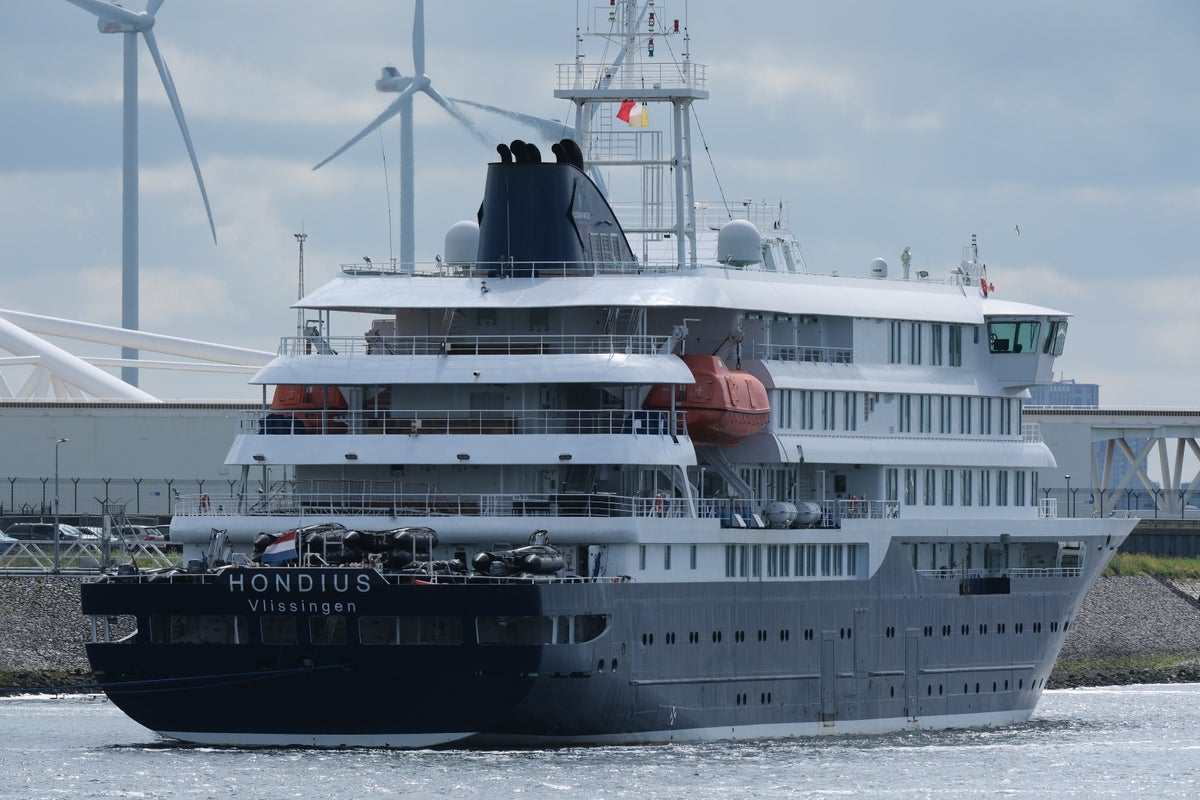
The Trump administration recently authorized $750,000 to charter a private luxury trimaran yacht to evacuate a single, asymptomatic American woman from a dot in the South Pacific Ocean. She had been a passenger on the MV Hondius, a Dutch cruise liner hit by a deadly hantavirus outbreak. The operation, which scrambled to retrieve her from Pitcairn Island after French authorities refused her entry into Tahiti, represents more than a logistical nightmare. It exposes an unprecedented cash crunch inside the State Department account meant to handle sudden international emergencies.
Known inside the Beltway as the K Fund, this emergency reservoir has quietly dropped to its lowest balance in seven years. Don't forget to check out our earlier coverage on this related article.
A deep dive into internal government documents and conversations with U.S. officials reveals that the extraordinary expense of the Pacific rescue is merely the tip of the iceberg. The emergency fund is buckling under the weight of a multi-front foreign policy crisis, compounded by systematic domestic rollbacks of global health infrastructure. While the White House insists the situation is under control, the State Department is secretly drafting blueprints to cannibalize embassy security and diplomatic programming budgets to keep the fund afloat.
Anatomy of a Pacific Scramble
The stranded citizen, an ordinary traveler with no political ties or celebrity status, inadvertently triggered a geopolitical domino effect. After disembarking the MV Hondius in April, she flew through San Francisco and Tahiti, ultimately arriving at Pitcairn Island—a British territory with fewer than 50 residents, no airport, and virtually no modern medical facilities. If you want more about the history here, Associated Press provides an informative breakdown.
When the World Health Organization confirmed that hantavirus on the cruise ship had turned lethal, tracking teams traced her route. The problem arose when French Polynesian authorities realized she had omitted her potential exposure while transiting Tahiti. They promptly barred her from returning.
With commercial travel nonexistent and regional governments closing their borders to anyone connected to the outbreak, the State Department resorted to extreme measures. They contracted the Titaina Explorer, a massive trimaran yacht owned by a wealthy French national, to transport the woman across 1,400 miles of open ocean to Easter Island, a Chilean territory. From there, she can finally board a commercial flight to Santiago and return to the United States.
The baseline invoice for the yacht alone sits at $750,000. The final bill, once fuel, maritime insurance, and medical escorts are tallied, will be significantly higher.
The Mechanics of the K Fund Drain
To understand why a three-quarter-million-dollar expenditure is causing panic in Washington, one must look at the structural pressures currently squeezing the State Department. The K Fund—officially titled the Emergencies in the Diplomatic and Consular Service appropriation—is designed to be a nimble, unrestricted bucket of money. It pays for the evacuation of diplomats, unexpected humanitarian rescues, and urgent security operations during unforeseen international crises.
It was never meant to operate under the concurrent strain of a major regional conflict and a global health scare. The fund has been severely depleted by the continuous, high-cost evacuation of American diplomats and private citizens from the Middle East following the outbreak of the war involving Iran. Simultaneously, the government has had to reserve millions for potential emergency pullouts from African nations currently battling a severe, expanding Ebola outbreak.
An internal State Department memorandum reveals the desperation behind the scenes. Officials are actively weighing an emergency transfer of up to $50 million into the K Fund from other critical accounts. The proposed patch involves taking $35 million directly from the budget reserved for embassy security, construction, and maintenance, alongside $15 million stripped from broader diplomatic programming.
Pulling money from embassy security at a time of heightened global volatility is a gamble. If a U.S. consulate faces an attack or a structural failure over the next few months, the money required for rapid reinforcement will have already been spent chartering yachts in the Pacific or running evacuation flights out of war zones.
The Cost of Defunding Prevention
The administration's defenders argue that the K Fund's depletion is simply the cost of doing business in a dangerous world. This argument, however, ignores a critical policy shift that took place just one year prior.
In 2025, the administration executed a sweeping series of budget cuts guided by the Department of Government Efficiency. Among the casualties was the total cancellation of federal funding for the West African Center for Emerging Infectious Diseases, alongside nine other global centers under the National Institutes of Health. These centers were specifically tasked with tracking how animal-borne pathogens, like hantavirus, mutate and jump to human populations.
Furthermore, the administration's formal withdrawal from the World Health Organization and aggressive cuts to USAID foreign aid dismantled frontline surveillance systems in vulnerable regions. Public health experts argue that when you eliminate the systems that detect outbreaks at their source, you guarantee that containment fails.
The political fallout is already intensifying on Capitol Hill. Senate leaders have pointed out the bitter irony of the situation. The administration saved a few million dollars by cutting preventative viral research and international monitoring networks, only to turn around and spend $750,000 on a single private yacht because a localized outbreak slipped past international borders undetected.
The Reality of Hantavirus Exposure
The biological threat driving this expensive operation is notoriously severe, yet misunderstood. Hantaviruses are typically transmitted when humans inhale dust contaminated with the urine, saliva, or droppings of infected rodents.
| Disease Profile | Hantavirus |
|---|---|
| Primary Vector | Rodent excretions (mice, rats) |
| Transmission | Inhalation of aerosolized viral particles |
| Severe Symptoms | Acute respiratory distress, myocardial depression, shock |
| Treatment | No specific antiviral; requires supportive ICU care |
| Fatality Rate | Historically up to 38% depending on the specific strain |
Because the current outbreak occurred aboard a closed cruise liner, scientists are scrambling to determine the exact mechanism of transmission. There is no specific cure or vaccine; medical teams can only provide supportive therapy like mechanical ventilation and intravenous fluids.
The American woman on the yacht remains entirely asymptomatic. Because the incubation period can stretch for weeks, and because Pitcairn Island lacks the ventilators required to save her life if her lungs begin to fail, the State Department felt it had no choice but to launch the mission.
A System Lacking Friction
State Department spokespeople have publicly downplayed the crisis, asserting that the agency remains well-positioned to support Americans abroad and that asking Congress for a direct K Fund replenishment remains an open option.
Relying on a polarized Congress for emergency funds is a slow, politically fraught process. The true vulnerability lies in the lack of financial padding left for the remainder of the fiscal year. A government cannot run an agile foreign policy when its primary emergency reserve is being managed month-to-month, forcing officials to choose between securing physical embassies or rescuing isolated citizens.
The Pacific yacht rescue serves as a stark warning. When a nation systematically dismantles its global health defense networks to trim the federal budget, it does not actually eliminate the costs of global crises. It merely trades the predictable, manageable expenses of disease surveillance for the chaotic, exorbitant bills of emergency damage control.