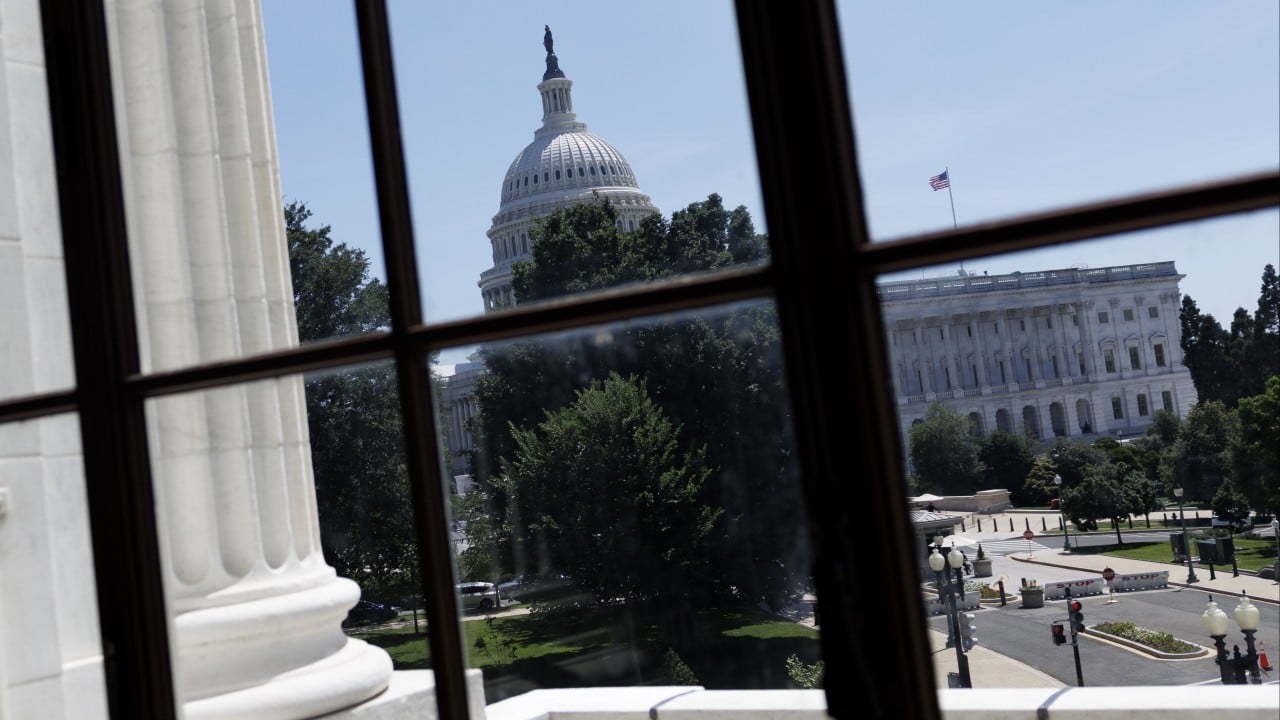
The media is choking on its own narrative again. Turn on any news network or read any mainstream financial column, and you will see the same lazy consensus regarding the US Senate’s recent $70 billion Immigration and Customs Enforcement (ICE) funding package. The left is mourning a missed opportunity to dismantle what they call "anti-weaponisation" guardrails. The right is chest-thumping over a massive financial injection for national security.
Both sides are completely missing the point.
Throwing $70 billion at a broken, bureaucratic assembly line does not secure a border, nor does it fix an economic supply chain. It simply subsidizes inefficiency. I have spent two decades analyzing public sector capital allocation and operational infrastructure. If a private enterprise operated with the structural bottlenecks inherent in our current immigration apparatus, a $70 billion cash infusion wouldn't save it from bankruptcy; it would just accelerate the burn rate.
The obsession with top-line funding metrics is a distraction from the structural reality of institutional inertia.
The Myth of the Financial Fix
Every major legislative push treats federal budgets as a scoreboard. If the number goes up, the problem is supposedly being addressed. But capital injection without structural re-engineering is a proven recipe for waste.
Consider where this $70 billion actually goes. It does not magically materialize as an impenetrable wall, nor does it instantly transform into streamlined, high-throughput processing centers. The vast majority of these funds are swallowed whole by legacy procurement cycles, bloated administrative overhead, and short-term reactionary logistics.
- Procurement Delays: Federal acquisition regulations ensure that by the time a single dollar of this funding is spent on technology or physical infrastructure, the operational requirements on the ground have already shifted.
- The Overtime Trap: A massive chunk of emergency funding routinely goes toward funding mandatory overtime for an exhausted workforce rather than expanding long-term capacity.
- Contractor Premium: When the government flushes billions into the market rapidly, defense and security contractors immediately hike their premiums. You are paying twice as much for the same units of output.
Imagine a logistics company with a fleet of trucks stuck in a permanent traffic jam because the delivery hub has only two offloading bays. Buying 10,000 more trucks does not get the packages delivered faster. It just creates a longer, more expensive gridlock. The Senate just bought more trucks for a hub that cannot process the inventory it already has.
The Anti-Weaponisation Fund Fallacy
The political theater surrounding the failed ban on the "anti-weaponisation" fund is equally misunderstood. Pundits argued for weeks that leaving this fund intact allows the executive branch to bypass congressional intent and manipulate enforcement priorities.
This view ignores how administrative law actually functions.
Executive agencies do not need specialized, labeled funds to pivot their operational focus. They use prosecutorial discretion. They shift personnel. They alter internal guidance memos. The obsession with banning specific line-item funds assumes that bureaucracy is rigid and literal, when in reality, it is highly fluid and deeply resistant to legislative micromanagement.
By focusing the entire debate on this symbolic fund, lawmakers completely ignored the true operational bottleneck: the immigration court system.
[Current System Pipeline]
Inflow -> Immediate Apprehension -> Case Backlog (Years of Delay) -> Enforcement Failure

[The Rational Pipeline]
Inflow -> High-Throughput Triage -> Immediate Adjudication -> Resolution
Right now, the Executive Office for Immigration Review (EOIR) is drowning in millions of pending cases. The average case takes years to resolve. When you pump $70 billion into enforcement (the front end of the pipeline) without proportionally expanding the judicial infrastructure (the bottleneck), you create a catastrophic backlog. You arrest more people, place them into a system that cannot process them, and eventually release them pending a court date a half-decade away.
That is not security. That is an expensive game of catch-and-release funded by the taxpayer.
The Labor Market Reality Nobody Wants to Face
Let us look at the economic data that politicians refuse to mention on the campaign trail. The American domestic economy is facing an unprecedented demographic crunch. The birth rate is below replacement level. The labor force participation rate is stagnant. Key sectors—agriculture, construction, hospitality, and eldercare—are facing chronic, structural labor deficits.
Sector         | Labor Deficit Trend | Economic Impact of Undersupply
-----------------------------------------------------------------------
Agriculture    | High                | Surging food production costs
Construction   | Severe              | Stalled housing development
Eldercare      | Critical            | Exponentially rising healthcare costs
When you restrict the legal pathways for labor immigration while failing to build an efficient processing mechanism, you do not stop the flow of workers. You simply drive them underground.
This creates a massive, unregulated shadow economy. Unscrupulous employers exploit undocumented workers to undercut legitimate businesses that play by the rules. The treasury loses out on billions in potential payroll taxes. Meanwhile, consumer prices rise because the legal supply chain cannot access the labor it requires to function at peak capacity.
The contrarian truth is clear: a highly restrictive, slow, and under-resourced legal entry system is the primary driver of illegal border crossings. If an individual has a legal, efficient, and transparent mechanism to apply for work authorization and enter the country, the market for human smuggling collapses overnight. Cartels lose their customer base when the state provides an accessible, lawful alternative.
Dismantling the Standard Premises
People frequently ask: "Why can't we just close the border until we sort out the backlog?"
This question is based on a fundamental misunderstanding of global trade. The US-Mexico border is not just a line on a map; it is an economic artery. Millions of dollars in commercial trade cross that border every single minute. Complete closures halt supply chains, disrupt auto manufacturing, cause agricultural products to rot in trucks, and trigger immediate inflationary spikes across American grocery stores. Enforcement must coexist with high-velocity commerce. You cannot shut down the highway to fix a pothole.
Another common question: "Doesn't more funding mean better technology and smarter borders?"
Only if the technology matches a coherent strategy. For years, I have seen agencies purchase multimillion-dollar biometric systems, drone fleets, and advanced sensors that sit idle or generate data streams that legacy federal IT systems cannot integrate. Technology without interoperability is just expensive window dressing. Buying shiny hardware makes for a great press conference, but it does nothing if you lack the personnel trained to analyze the data or the legal framework to act on it rationally.
How to Actually Fix the Infrastructure
If you gave a private-sector turnaround expert $70 billion to solve this crisis, they would not spend a dime on additional field apprehensions until the core processing engine was completely rebuilt.
- Industrialize the Adjudication Process: Move immigration courts out of the Department of Justice and turn them into an independent, streamlined administrative tribunal system. Hire thousands of dedicated hearing officers, not just judges, to handle straightforward economic migration cases rapidly.
- Shift to Decentralized processing Hubs: Stop forcing the entire burden onto a few physical points of entry. Establish processing and vetting centers within country of origin transit corridors. Verify identities, run background checks, and issue conditional work visas before individuals ever reach the physical US border.
- Tie Visas Direct to Real-Time Labor Data: Create a dynamic immigration quota system tied directly to Department of Labor shortage metrics. If the construction sector needs 200,000 workers this quarter, the system should automatically scale visas to meet that specific demand. When the market cools, the quota scales back.
This approach acknowledges the reality of human behavior and market forces. It treats migration as a liquidity and logistical challenge, rather than a purely militaristic one.
The current strategy is an exercise in futility. The Senate's $70 billion bill is a monument to political cowardice, designed to give lawmakers a talking point for their next campaign advertisement while ensuring the underlying structural rot remains completely untouched.
Stop celebrating the price tag. Start demanding a functional system.



:max_bytes(150000):strip_icc()/how-many-types-of-dwarfism-are-there-2860725-v1-8dae2c531b4b47d9ae36ae404d3308a0.png)